The Fault Line · Part 4-4
When the empire came for the altar, a village priest reached for a knife.
Section I
The Night the Altar Changed Gods
On the fifteenth of Kislev in what scholars date to December 167 BCE, Seleucid soldiers carried a pagan altar into the Temple courts of Jerusalem and erected it over the one that had stood there since the days of Zerubbabel. The act was deliberate, its timing calculated, its symbolism unmistakable. The daily sacrifice — the tamid, the twice-daily offering that marked the rhythm of covenant life — was stopped. In its place, according to 1 Maccabees, pigs were sacrificed on the altar and the sanctuary was dedicated to Zeus Olympios.
The book of Daniel names this moment the “abomination of desolation” — šiqqûṣ mĕšōmēm (Daniel 11:31). The phrase was still in circulation two centuries later when Jesus used it in the Olivet Discourse. But in 167 BCE, it was not a metaphor. It was a headline. And the question the event posed was not theological in the first instance. It was practical: what do people do when the ruling power comes for the altar?
The answer that came out of the Judean hills would outlast the Seleucid political order by two millennia. It would shape the theology of resistance in ways that still run beneath the surface of every conversation about cultural accommodation and religious identity in a pluralist world. And it began — as these things so often do — not with a general or a manifesto, but with one elderly priest and a knife in a village square.
The deeper question was not whether Judea could defeat an empire. It was whether it could survive becoming one.
In the previous installment, we examined the prophet who ran the wrong way — Jonah’s encounter with divine mercy toward his nation’s oppressor, and the question the book leaves open for every generation. Read Part 4-3: The Prophet Who Ran the Wrong Way →
Section II
The World Alexander Left Behind
To understand what Antiochus IV was doing in 167 BCE, it helps to understand the world his ancestor Alexander had made.
Alexander the Great died in Babylon in 323 BCE at thirty-two, having conquered an arc of territory stretching from Greece to the edge of India. He died without a clear heir, and his generals divided the empire among themselves in a series of wars that produced three major successor kingdoms: the Ptolemies in Egypt, the Seleucids in Syria and the east, and the Antigonids in Macedonia. Judea sat on the land bridge between Egypt and Syria, which meant it changed hands between Ptolemaic and Seleucid control depending on which dynasty was stronger. The Jews spent roughly a century under Ptolemaic rule, which was relatively tolerant of local religious custom, and then came under Seleucid authority in 198 BCE when Antiochus III defeated the Ptolemaic forces at the Battle of Panium.
The Seleucid political system had a structural problem. It was vast, multilingual, and ethnically diverse in ways that made coherent governance perpetually difficult. The policy that offered itself as a solution was Hellenization — the spread of Greek culture, language, gymnasium education, and civic identity as a unifying framework across disparate territory. In most places, this worked well enough. Local elites found it advantageous to participate in Greek culture; the gymnasium was a path to social advancement; Greek became the language of commerce and administration across the eastern Mediterranean. Most subject peoples adapted.
Judea was complicated. Not because Jews were uniquely resistant to cultural influence — the evidence of 1 and 2 Maccabees itself suggests that a significant portion of the Jerusalem priestly elite was enthusiastically Hellenized by the early second century BCE. The gymnasium appeared in Jerusalem not imposed from outside but installed by a Jewish High Priest, Jason, who purchased the office from Antiochus IV through bribery around 175 BCE and used it to authorize Greek athletic education in the shadow of the Temple. According to 2 Maccabees 4:14, some priests abandoned their Temple duties to participate in the discus throw when the signal sounded from the wrestling arena. The cultural pressure was not simply external. It had advocates inside the sanctuary itself.
It is worth pausing here on Antiochus IV himself — not to rehabilitate a figure the Jewish tradition rightly names harasha, “the wicked,” but to resist the flattening that comes from reading history only through its outcomes. Antiochus likely viewed the crisis not primarily as a religious dispute but as a political threat to imperial cohesion. A chain of events — a disputed high priesthood, a Jewish uprising he apparently misread as a full-scale rebellion against Seleucid authority, a humiliating Roman ultimatum that had just forced him out of Egypt — produced a policy response that was, even by Seleucid standards, unusually severe. What Josephus described as the king’s subsequent campaign was systematic: circumcision was banned under penalty of death, Sabbath observance was forbidden, Torah scrolls were confiscated and burned, and the Temple was converted into a site of syncretic Greek-Jewish cult. Women who circumcised their sons were executed with their infants hung around their necks (1 Maccabees 1:60–61).1
That is not to minimize what was done. It is to recognize that empires rarely understand themselves as villains. Antiochus IV believed he was stabilizing a restive province, enforcing administrative uniformity, and suppressing what he had construed as a rebellion. He was wrong about nearly all of it — wrong about the nature of Jewish covenantal identity, wrong about what the response would be, wrong about how history would remember him. But his wrongness was not random. It was the specific wrongness of a political logic that cannot conceive of religious identity as anything other than a variable to be managed.
The resistance that followed began, as the book of 1 Maccabees records it, in the village of Modein, perhaps twenty miles northwest of Jerusalem. An elderly priest named Mattathias was ordered by Seleucid officers to offer sacrifice on a pagan altar. When he refused, another Jew stepped forward to comply. Mattathias killed them both — the apostate Jew and the king’s officer — tore down the altar, and issued what 1 Maccabees 2:27 records as a rallying call: “Let everyone who is zealous for the law and who stands by the covenant follow me.” He and his five sons fled into the Judean hills. The dust settled on Modein. The hills were cold and full of limestone. They went anyway.
Mattathias died the following year, around 166 BCE, leaving command to his son Judas. The name “Maccabee” — generally understood as “the Hammer” — attached first to Judas and then to the whole family. The Hammer’s guerrilla campaign against Seleucid forces in the hill country became, within three years, a military insurgency that recaptured Jerusalem and drove the occupying garrison from the Temple precincts.
On the twenty-fifth of Kislev, 164 BCE — exactly three years after the altar had been changed — Judas Maccabeus rededicated the Temple. The purification took eight days. That celebration is, annually, Hanukkah.
Section III
Three Texts on What Survives the Dominant Order
The first scripture is the passage in Daniel that the Maccabean period made famous, and whose resonance extended far beyond its immediate historical context:
“Forces from him shall appear and profane the temple and fortress, and shall take away the regular burnt offering. And they shall set up the abomination that makes desolate.” (Daniel 11:31, ESV)
The scholarly debate over Daniel’s composition — whether the book was written in the sixth century BCE as genuine prediction or in the second century BCE as vaticinium ex eventu, prophecy formulated after the fact — is not one this essay can resolve, and intellectual honesty requires saying so plainly. What is historically clear is that the Maccabean generation read Daniel as speaking directly to their moment. The language of abomination, of the daily sacrifice stopped, of a king who exalted himself above every god — this was not abstraction to the people who lived under Antiochus IV. It was their news, given a frame that placed their suffering inside a larger story with a trajectory. Whether the text was predictive or contemporaneous, it performed the same function: it told a community under unbearable pressure that what was happening to them had been seen, had been named, and was not outside the reach of the God they served.
The second scripture is Daniel 11:32 — the verse immediately following — which offers what may be the most compressed theology of resistance in the entire Hebrew canon:
“He shall seduce with flattery those who violate the covenant, but the people who know their God shall stand firm and take action.” (Daniel 11:32, ESV)
The verse is worth sitting with. Two categories of people occupy it. Those who violate the covenant are seduced by flattery — which in the Maccabean context means the social, economic, and political inducements of Hellenization. The gymnasium, the Greek name, the civic privileges of enrollment as a citizen of Antioch: these were not coercive in themselves. They were attractive. The Hellenized Jewish elite of Jerusalem pursued them willingly. The flattery was real. What the verse identifies is not simply the coercive power of hegemonic culture but its rhetorical power — the way it makes accommodation feel like sophistication, and resistance feel like provincialism.
Against that, the text places a different category: those who know their God. They stand firm and take action. The Hebrew word here — ya’asu — is a verb of doing, of practical engagement. This is not a theology of passive endurance. It is a theology of deliberate response, which is precisely what Mattathias demonstrated at Modein: not merely an outburst of violence, but a public act intended to draw a line — in full view of his community — at the point where compliance would have become indistinguishable from surrender.
The third scripture is the one Hanukkah carries without always acknowledging it — John 10:22–23, the only reference to the festival of dedication in the New Testament:
“At that time the Feast of Dedication took place at Jerusalem. It was winter, and Jesus was walking in the temple, in the colonnade of Solomon.” (John 10:22–23, ESV)
The placement is deliberate in John’s Gospel. Jesus walks in the colonnades of the Temple during Hanukkah — the feast that commemorated the Maccabees’ recovery of precisely that space from pagan occupation. Within a few verses, the crowd asks whether he is the Messiah. The feast of the dedication, the festival of the Hammer, is the backdrop against which the question about messianic identity is pressed. John’s Gospel is not unaware of the irony. The Temple that the Maccabees purified at such cost would be destroyed by Rome within a generation of this scene. The pattern does not end with the victory. It continues through it.
Section IV
Adaptation, Dissolution, and the Line
The Maccabean revolt is almost always remembered as a victory. In the immediate term, it was. The Temple was recaptured. The daily sacrifice resumed. Jewish religious practice was legalized again within three years of Mattathias’s stand at Modein. The Hasmonean dynasty — the political structure that grew from the revolt — governed an independent Judea for roughly a century, until Pompey’s Roman legions entered Jerusalem in 63 BCE.
But the longer view complicates the victory narrative in ways the revolt itself never fully resolved.
The line the Maccabees drew at Modein was a line against forced Hellenization. It was not, in practice, a line against cultural adaptation as such. The Hasmonean dynasty that emerged from the revolt increasingly adopted the structures and symbols of Hellenistic kingship — including the title “king,” which earlier Jewish leadership had refused as incompatible with the covenant community. The Hasmonean court became, in the generations after Judas Maccabeus, substantially what it had fought against: a Hellenized Jewish elite using Greek political forms, Greek administrative language, and Greek-style dynastic succession, while maintaining Jewish religious observance as the official framework of the state. The tension between cultural adaptation and identity dissolution did not disappear when the Seleucids left. It migrated inside the Hasmonean house itself.
This pattern — resistance to cultural dissolution that produces a new, internally generated form of the same pressure — is not unique to the second century BCE. The underlying question has not disappeared with the ancient world. Pluralistic societies raise versions of it continuously, in very different registers.
The Pew Research Center’s 2023–24 Religious Landscape Study — the most comprehensive survey of American religious identity in a generation — found that the Christian share of the U.S. adult population had fallen from 78 percent in 2007 to 62 percent in 2023–24, a decline driven less by active rejection of faith than by what researchers describe as gradual disaffiliation across demographic groups (Pew Research Center, Religious Landscape Study, 2025).2 The precise dynamics are entirely different from second-century Judea — no Seleucid officer is ordering anyone to sacrifice a pig. But the structural question the Maccabees faced is recognizable in a different key: identity does not typically dissolve under external force. It thins, quietly, through accommodation. The Hasmonean dynasty understood that better than anyone. It had lived through the revolt that proved the point.
The rabbinic tradition’s answer to that question takes a form that might seem, at first glance, evasive. After the Temple was recaptured, after the altar fires were rekindled, after the guerrilla campaign had accomplished what no one believed possible — the later rabbis chose not to center the Hammer. They centered the oil.
Think for a moment about what that choice means. These were communities writing in the shadow of a second destruction of the Temple, in 70 CE, by Rome — a hegemonic culture that, like the Seleucids before it, had reduced the sanctuary to rubble. The military victory of 164 BCE had not, in any lasting political sense, held. The dynasty the Maccabees founded had itself fallen into the pattern it resisted, and Rome had come to finish what the Hasmoneans had started to compromise. And yet the rabbis, compiling the Talmud centuries later, preserved a story not about the battle but about a small sealed jar of oil found in the recaptured Temple, still bearing the High Priest’s mark, sufficient for one day’s light, that burned for eight.
The rabbinic tradition preserves this account in Tractate Shabbat 21b, composed roughly five to six centuries after the events it describes.3 It does not appear in 1 or 2 Maccabees, the closest contemporary records of the revolt — which focus on the military campaign and the eight-day celebration of rededication without mentioning any oil miracle. What the Talmud’s account represents, as one strand of that tradition suggests, is not journalism but theological interpretation: a reading of what the Maccabean moment ultimately meant, offered by a community that had survived a second catastrophe and needed to understand what endures when the political victory does not last.
What does not dissolve, the tradition seems to say, is what was kept lit even when there was barely enough to sustain it.
The oil story is a theological claim, not a historical argument. But it is precisely the kind of claim that outlasts the collapse of political structures that seemed, in their moment, far more durable than a jar of olive oil.
Section V
What the Flame Was For
The Hasmonean dynasty that the Maccabees founded ended not with an external conquest but with an invitation. In 63 BCE, two Hasmonean princes — brothers locked in a succession dispute — each sent envoys to the Roman general Pompey asking him to arbitrate their conflict. Pompey obliged. He marched his legions into Jerusalem, entered the Temple, and installed his preferred claimant as a client ruler. The dynasty that had fought for independence from one dominant order ended by inviting another one in.
There is a quiet point inside that history. The Maccabees fought against the instrumentalization of the Temple — against a political authority that entered the sanctuary and redirected its worship toward imperial ends. The dynasty they founded eventually became complicit in arrangements that made the Temple a political instrument again, with a different power providing the architecture of control. What the revolt secured was a century of relative autonomy. What it could not secure was immunity from the pattern it had resisted.
The book of 1 Maccabees closes before the dynasty’s decline. It ends on something close to triumph. The Talmud’s oil story also closes in light — eight days of sustained flame, the sanctuary rededicated, the priests returned to their work. Both endings are true to their moment. What neither fully addresses is the question the pattern keeps raising: what is preserved when the political structure that defended it eventually accommodates or collapses?
The Maccabean answer — incomplete, wrested out of specific historical circumstances — is that something survives the dominant order that is not itself political. The oil burned after the soldiers left. The flame held in the sanctuary not because the Hammer had secured its borders but because someone had, in the middle of the occupation, kept a sealed jar aside from the contamination. That act of preservation — small, quiet, seemingly impractical in a moment of military emergency — is what the rabbinic tradition chose to center. Not the battle. Not the dynasty. The jar.
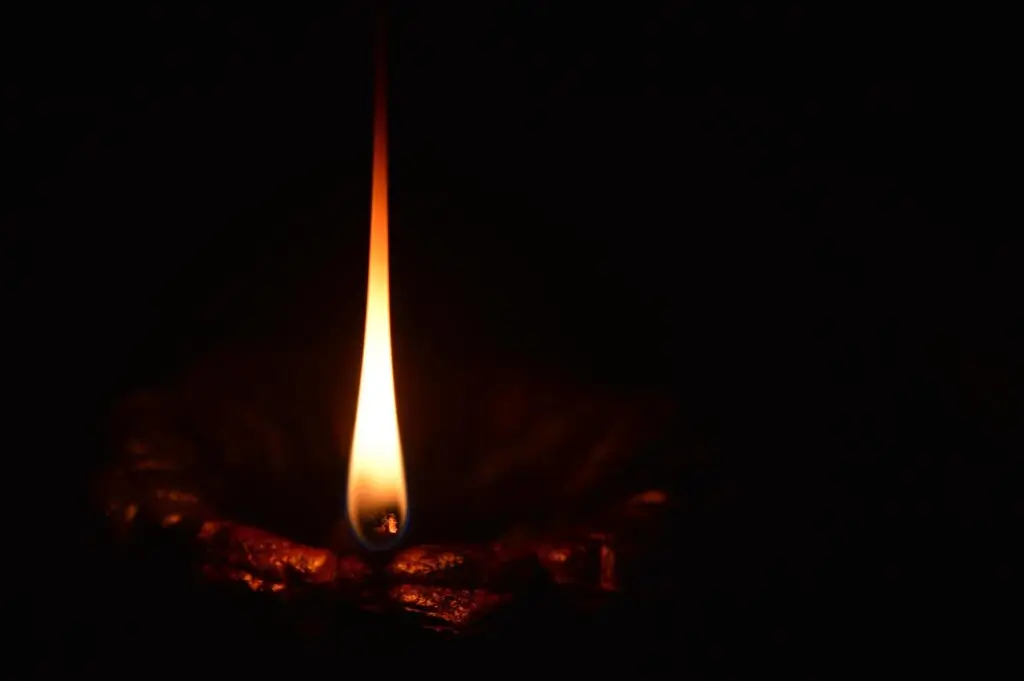
That reading of the Maccabean moment has traveled further than the Seleucid political order, further than the Hasmonean dynasty, further than the Rome that absorbed both. It still circulates every December, in the lighting of candles that commemorates an oil supply that should have been exhausted in a day. The imperial system that extinguished the altar fire lasted less than two centuries. The fire that replaced it is still being lit.
The deeper question the Hook posed — whether Judea could survive becoming what it resisted — was never fully resolved in the political arena. Empires rarely are. But it found an answer in a different register: in the decision to remember not the Hammer, but the flame the Hammer fought to keep burning.
Footnotes
1 The primary accounts of the Antiochene crisis are 1 Maccabees 1–4 and 2 Maccabees 4–10. Josephus treats the same events in Antiquities of the Jews, Book 12, chapters 5–7. For a scholarly analysis of Antiochus IV’s political motivations and the distinction between religious persecution and imperial administrative response, see Elias Bickermann, The God of the Maccabees: Studies on the Meaning and Origin of the Maccabean Revolt, trans. Horst R. Moehring (Leiden: Brill, 1979). Bickermann’s reading remains foundational to the scholarly debate over whether Antiochus was acting from ideological conviction or from political calculation — a debate that has not been fully resolved. ↩
2 Pew Research Center. Decline of Christianity in the U.S. Has Slowed, May Have Leveled Off [2023–24 Religious Landscape Study]. Washington, D.C.: Pew Research Center, February 26, 2025. The 78% to 62% decline in the Christian share of U.S. adults between 2007 and 2023–24 is drawn from the study’s Religious Identity chapter. Available at pewresearch.org. ↩
3 Biblical citations follow the English Standard Version (ESV) unless otherwise noted. Key passages: Daniel 11:31; Daniel 11:32; John 10:22–23. For the Talmudic account of the oil miracle, see Babylonian Talmud, Tractate Shabbat 21b. The oil miracle does not appear in 1 or 2 Maccabees; the scholarly consensus dates the Talmudic account to approximately 450–550 CE, roughly five to six centuries after the Maccabean revolt. For the standard scholarly treatment, see Britannica, “Hanukkah” (encyclopaedia entry, updated 2025), and the discussion in Lawrence H. Schiffman, From Text to Tradition: A History of Second Temple and Rabbinic Judaism (Hoboken: Ktav Publishing House, 1991). ↩