Section I
They Chose the Plain on Purpose
In the spring of 2025, the United Nations High Commissioner for Refugees reported that the global number of forcibly displaced people had surpassed 120 million for the first time in recorded history — nearly one in sixty-five people on earth uprooted, searching for ground on which to settle (UNHCR, 2025). The statistic arrived with the usual gravity and the usual silence. Displacement, in the modern imagination, is what happens to the powerless. It is something done to people, not chosen by them.
But the oldest story of mass migration in the biblical record complicates that assumption in ways that have never fully been resolved. In the previous installment, we examined how the age of Peleg encoded irreversible division into the genealogy of nations — the kind of fracture that outlives the people who cause it. This installment turns to an earlier moment: a movement of people that was not forced upon them, but freely undertaken — and what that choice revealed about the gravitational pull of concentrated power.
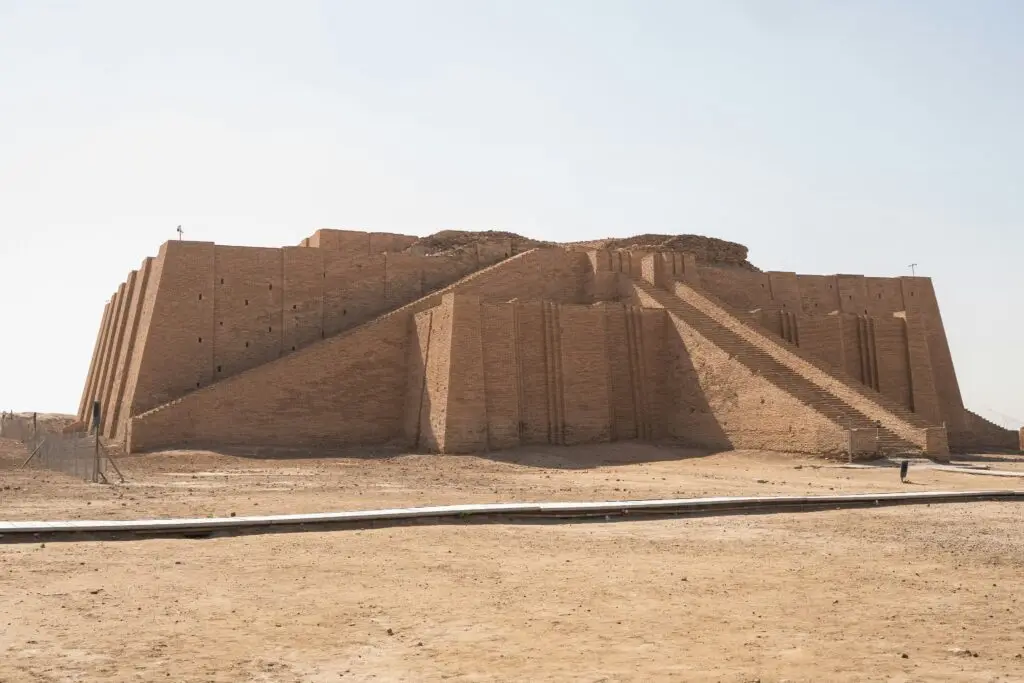
Genesis 11:2 records it with almost casual economy: “As people moved eastward, they found a plain in Shinar and settled there” (NIV). What reads like a travel note is, on closer examination, a theological verdict.
A plain offers a particular kind of visibility. No mountains. No natural boundaries. No terrain that resists expansion. In the ancient world, flat open land was the geography most hospitable to centralized rule — easy to survey, easy to control, easy to fill with a single governing vision.
The settling was not neutral. The project that followed was not merely ambitious. It was, by the text’s own logic, a structured act of collective defiance against the one command given most clearly after the flood: fill the earth, scatter, multiply across it. The people of Shinar did the opposite. They gathered. They consolidated. They built.
What the tower represented has occupied interpreters for millennia. What the plain represents has received far less attention — and it may be the more instructive detail.
Section II
The Shape of Consolidation
The twentieth century produced no shortage of regimes willing to treat geography as an instrument of ideology. The cases differ enormously in scale, motivation, and moral gravity. But across that difference, a structural pattern recurs: move people toward a center, concentrate them on a plain, and build something that announces the power of the collective over the disorder of open land.
The starkest example is Cambodia under the Khmer Rouge between 1975 and 1979. When Pol Pot’s forces entered Phnom Penh in April 1975, they did not occupy the city — they emptied it. Within days, roughly two million people were driven at gunpoint into the countryside (Kiernan, 2008). The stated justification was ideological purity: cities were corrupt, bourgeois, spiritually contaminated. What the regime actually wanted was a flat agrarian plain populated by human units it could control, enumerate, and exhaust. The result was not liberation. It was the largest forced agricultural labor camp in modern history, and it killed approximately 1.7 million people — a quarter of the country’s population — within four years (Kiernan, 2008).
The polarity is worth pausing on. Shinar drew people toward a city; the Khmer Rouge drove them away from one. The direction of movement was reversed. The logic beneath it was the same.
In both cases, migration was not about finding better ground. It was about placing human bodies in the geometry most useful to those who intended to rule them. The plain was never the destination. It was the instrument.
A second episode, different in kind and catastrophically larger in intent, follows the same pattern. Nazi Germany’s Generalplan Ost envisioned the systematic colonization of Eastern Europe’s wide plains — the Lebensraum Hitler had promised since the 1920s (Snyder, 2010). Polish, Ukrainian, and Belarusian populations were to be expelled, starved, or eliminated; German settlers would take their place on land cleared by genocide. The moral scale here is different from Cambodia — the ideology more explicitly eliminationist, the machinery of death more deliberate — but the underlying spatial logic is recognizable. What the planners could not tolerate was the existing human diversity of those plains — the intermingled peoples, languages, and traditions that the text of Genesis might recognize as the natural fruit of dispersion. To build their tower, they first had to flatten the ground.
There is also a longer and less violent precedent worth tracing, if only because it illustrates how the instinct survives even when dressed in the language of faith. Beginning in the twelfth century, the Drang nach Osten — the eastward colonization movement of the Holy Roman Empire — drove waves of German settlers into Slavic territories east of the Elbe River (Bartlett, 1993). The formal rationale was the extension of Christendom. The operative logic was territorial accumulation and the consolidation of economic power. Fortified towns were planted across the plains as nodes of centralized authority, each one staking a claim to permanence against open land. Beneath the sacred language was the same instinct that had animated Shinar.
Section III
What the Plain Requires
The Babel account in Genesis 11 is brief enough that its brevity is itself a form of commentary. In eleven verses, the text dispatches a civilization. What it preserves in those eleven verses is a sequence: arrival on a plain, decision to settle, acquisition of technology, articulation of purpose, and divine response. Each step enables the next. The plain enables the settlement. The settlement enables the project. The project reveals the purpose.
“Come, let us build ourselves a city, with a tower that reaches to the heavens, so that we may make a name for ourselves; otherwise we will be scattered over the face of the whole earth.”
— Genesis 11:4 (NIV)
“But the LORD came down to see the city and the tower the people were building.”
— Genesis 11:5 (ESV)
“To Eber were born two sons: the name of the one was Peleg, for in his days the earth was divided, and his brother’s name was Joktan.”
— Genesis 10:25 (ESV)
The phrase “otherwise we will be scattered” is the theological hinge of the narrative. The builders were not ignorant of God’s command. They named it explicitly — and then chose against it. The tower was not the primary ambition. The refusal to scatter was. The tower was the monument to that refusal: the visible argument that this gathering was permanent, intentional, and larger than any single authority could reverse.
The rabbinical tradition preserves an arresting reading of the Nimrod figure who stands behind the Babel story. One strand of that tradition describes Nimrod as the first king — the first human being to systematically organize other human beings under a single governing will — and connects his emergence to the post-flood fracturing of social order (Ginzberg, 1909). Whether or not that reconstruction is historically recoverable, what the tradition shares with the Genesis text is a consistent intuition: consolidated power and collective disobedience are not separate phenomena. They tend to arrive together.
Scripture does not require that every outbreak be read as judgment; it does, however, insist that human beings pay attention to the moral and ecological conditions in which such crises emerge.
The New Testament does not revisit Babel by name, but the reversal at Pentecost in Acts 2 is unmistakable in its structure. Where Babel produced a fracturing of language that ended a shared project, Pentecost produced a multiplication of language that enabled one. Where Babel was an attempt to prevent scattering by building a center, Pentecost sent people outward from a center into dispersion. The structure of the two events is precisely reversed — which suggests that the author of Acts understood Babel not merely as a historical episode but as the paradigm against which the kingdom’s movement works.
Section IV
The Digital Plain
There is a version of the Shinar instinct unfolding at a scale no ancient text could have anticipated — and it operates not through forced migration or state violence but through the far quieter architecture of attention.
By 2024, roughly five billion people were using social media platforms globally, with the majority of that activity concentrated on fewer than ten platforms (DataReportal, 2024). The geographic dispersal that characterizes physical human life — different cities, different nations, different languages — does not produce a corresponding dispersal of digital community. Instead, populations voluntarily migrate toward a small number of platforms that function, structurally, as plains: flat, centralized, algorithmically managed spaces where a single governing logic determines what rises into view and what does not.
No one is forced onto these platforms. No army escorts them there. The migration is entirely voluntary — which is precisely what makes it so difficult to examine clearly.
The echo chamber is the digital equivalent of the Shinar settlement — a space in which a community chooses to hear only its own voice, amplified, and mistakes that amplification for confirmation. Research published in the Proceedings of the National Academy of Sciences found that algorithmic content curation significantly increases exposure to ideologically homogeneous material, particularly among users who engage most heavily with political content (Huszár et al., 2022). The mechanism is not coercion. It is preference, expressed at sufficient scale to produce the same structural effect as a wall.
The moral comparison to the previous century’s catastrophes should not be overstated. Platform design is not genocide. Algorithmic curation is not the Gulag. But the question the Babel text presses is not one of scale — it is one of direction. Which way are people moving? Toward dispersal and difference, or toward a plain where every voice confirms the one they brought with them?
The builders of Babel did not believe they were constructing a prison. They believed they were securing a legacy — a name durable enough to outlast the disorder of open land. The architects of platform monoculture do not describe their work as consolidation. They describe it as community, connection, belonging. The language differs. The instinct is familiar.
Section V
The Command That Remains Unrevoked
The judgment at Babel is often read as punishment — God disrupting human ambition out of something resembling competitive anxiety, as if heaven felt threatened by brickwork. That reading flattens the text. The disruption at Babel was not the introduction of a new command. It was the enforcement of an existing one. Scatter. Fill the earth. The confusion of languages did not contradict the original instruction; it made its fulfillment unavoidable.
What the Babel narrative preserves, then, is not primarily a warning against ambition. It is a record of what happens when a community builds its entire identity around the refusal to be dispersed — when the project of making a name becomes indistinguishable from the project of defying a calling. The plain was chosen because it was controllable. The tower was built because dispersal felt like dissolution. The fear underneath the tower was not the fear of God. It was the fear of smallness — of being scattered into insignificance across a world too large to name.
That fear is recognizable across centuries. It drives colonization and platform monopoly and every political movement that promises its adherents a center large enough to stand in without feeling lost. It is not a uniquely modern fear, and it is not a uniquely ancient one.
It is simply the fear of the creature who has not yet learned that to be sent out is not the same as being abandoned.
Pentecost did not reverse Babel by reunifying language. It reversed Babel by demonstrating that the multiplicity of language was never the problem. The problem was the refusal to go out into it. The disciples were sent — not gathered, not consolidated, not given a monument — and what they carried was not a name but a witness distributed across every tongue the empire had scattered.
- UNHCR. (2025). Global Trends: Forced Displacement in 2024. United Nations High Commissioner for Refugees. unhcr.org.
- Kiernan, B. (2008). The Pol Pot Regime: Race, Power, and Genocide in Cambodia under the Khmer Rouge, 1975–79 (3rd ed.). Yale University Press.
- Snyder, T. (2010). Bloodlands: Europe Between Hitler and Stalin. Basic Books.
- Bartlett, R. (1993). The Making of Europe: Conquest, Colonization and Cultural Change, 950–1350. Princeton University Press.
- Ginzberg, L. (1909). The Legends of the Jews, Vol. I. Jewish Publication Society of America.
- DataReportal. (2024). Digital 2024: Global Overview Report. datareportal.com.
- Huszár, F., Ktena, S. I., O’Brien, C., Belli, L., Schlaikjer, A., & Hardt, M. (2022). Algorithmic amplification of politics on Twitter. Proceedings of the National Academy of Sciences, 119(1), e2025334119.