Present Day
A World With Enough Grain, and 318 Million People Without Enough to Eat
In June 2026, the World Food Programme released a mid-year update carrying a number large enough to lose its meaning on first read: 318 million people across 68 countries are now facing crisis-level hunger or worse (WFP, 2026a). It is a figure that has more than doubled since 2019.
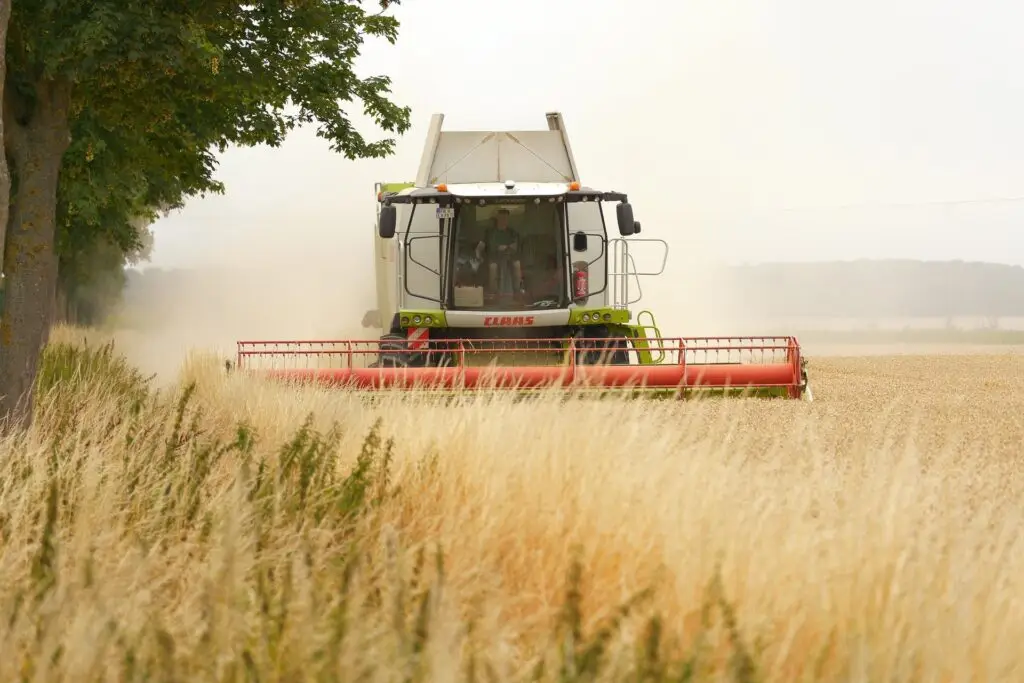
What makes the 2026 outlook different from a simple story of bad harvests is a detail buried in the same season’s reporting from the World Bank: global supply conditions remain broadly sufficient (World Bank, 2026). The grain exists. The wheat, the maize, the rice — in total, there is enough on the planet to feed the planet.
WFP’s Acting Executive Director, Carl Skau, put the tension plainly in a June briefing to the press. What he described was not a shortage but a rationing of mercy — conflict, funding cuts, and broken supply chains forcing families into what he called impossible decisions about who eats and who goes to bed hungry (UN News, 2026).
The question this series wants to sit with is no longer whether the world produces enough food. It is whether the systems meant to move abundance toward human need still know how to do their job.
A famine is rarely just the absence of food. It is far more often a failure to move food to the people who need it, while it continues moving somewhere else.
Nowhere in the modern historical record is that pattern easier to see, or harder to forget, than in Ireland between 1845 and 1852.
Historical Parallel
The Famine That Left on Ships Loaded With Food
In September 1845, a fungal blight appeared in potato fields across Ireland, and within weeks the crop that nearly three million tenant farmers depended on for survival had begun to rot in the ground. By the following year, the blight had returned with even greater severity, and it would recur, in varying force, for most of the next seven years (Woodham-Smith, 1962).
The number most often cited for the resulting mortality is roughly one million dead from starvation and related disease, with a further one to two million emigrating, many in vessels so poorly provisioned and disease-ridden that they earned the name “coffin ships” (Kinealy, 1994). Ireland’s population fell by close to a quarter in less than a decade.
What separates the Irish famine from a simple crop failure is a detail that horrified contemporary observers even as it was happening: throughout the worst years of starvation, Ireland continued exporting food. Grain, butter, and livestock left Irish ports for England on a regular schedule, often under armed escort to protect the cargo from the starving population watching it depart (Kinealy, 1994).
Economist Amartya Sen’s later work on famine reframed this kind of episode in terms that go beyond a simple export ledger — what Sen called a collapse of entitlement, the loss of a person’s socially recognized claim on food, even while food itself continues to exist nearby (Sen, 1981). Historian Cormac Ó Gráda has extended that framing specifically to Ireland, noting that halting the exports alone would not have closed the caloric gap left by the blight; the deeper failure was a government’s reluctance to import and distribute substitute grain at the scale and speed the crisis required (Ó Gráda, 1999).
This was not, in the main, a hidden or secret arrangement. It was the ordinary operation of a market and a political order that treated Irish food production as an export commodity first and a subsistence resource second, compounded by an administration slow to treat relief as an urgent obligation rather than a discretionary one.
A workhouse inspector touring County Cork in the winter of 1846 described conditions in terms that still unsettle a reader more than a century and a half later — families too weak to bury their own dead, and roads littered with those who had collapsed walking toward relief that did not exist in sufficient quantity to reach them (Woodham-Smith, 1962).
The Irish famine did not lack food. It lacked an order willing to redirect it, and a government willing to act with urgency once redirection alone would not have been enough. That distinction — between absolute scarcity and the collapse of entitlement — is the hinge on which nearly every subsequent study of famine has turned, from Bengal in 1943 to the food crises unfolding in 2026.
Scripture
What Scripture Already Understood About Grain, Governance, and Who Gets to Eat
Scripture’s most sustained meditation on famine is not a lament over scarcity. It is a story about stewardship — about what a society does with abundance when the lean years are still visible on the horizon.
“And that food shall be for store to the land against the seven years of famine.” (Genesis 41:36)
Joseph’s plan in Egypt reads, on the surface, as an administrative detail — grain stored rather than sold. But the text is describing something closer to statecraft than bookkeeping: Pharaoh grants Joseph the authority to govern a future risk before it arrives, reorganizing an entire economy around a famine that has not yet happened. The choice was not simply to store grain. It was to let governance, rather than the market of the moment, decide where the harvest would go.
“And Naomi said unto her two daughters in law… for the LORD hath dealt very bitterly with me.” (Ruth 1:8, 20)
Famine in Scripture rarely stays contained to appetite alone; it tends to unravel family structure, covenant community, and identity along with it. Ruth opens with a famine severe enough to send an entire family away from Bethlehem — whose name, notably, means “house of bread” — toward Moab in search of survival. Naomi’s family becomes economic migrants before the story becomes anything else, a detail Irish emigrants boarding coffin ships out of Cork or Queenstown would likely have recognized without needing it explained.
“That we may buy the poor for silver, and the needy for a pair of shoes.” (Amos 8:6)
Amos condemns a society in which ordinary commerce continues functioning smoothly while the basic covenant obligation toward the vulnerable quietly collapses underneath it. The prophet is not describing a market that has broken down. He is describing a market operating within institutional priorities that failed the vulnerable — commerce working precisely as its rules allowed, for everyone except the people those rules were supposed to protect.
Read together, these three passages are not making the same argument three times. They are describing three different points on the same collapse — governance, migration, and institutional indifference — and Ireland’s nineteenth century offers a case study in all three occurring within a single decade.
The Pattern
Why “Enough Food” Has Never Been the Same Question as “Enough Access”
The market rules Amos condemned and the governing hand Joseph exercised turn out to describe the same two forces still shaping the architecture of the global food system today — one that lets commerce run on autopilot, and one willing to intervene before scarcity becomes catastrophe.
The number that should trouble a reader in 2026 is not the size of the current hunger crisis. It is how familiar its shape has become.
World Bank data from June 2026 shows fertilizer prices projected to rise 38 percent this year, a cost pressure squeezing the same smallholder farmers whose harvests are most needed to close the gap (World Bank, 2026). Meanwhile, global grain stocks remain within a broadly sufficient range overall — this is not, in the main, a production crisis.
That combination — enough food in total, collapsing access at the household level — is precisely the arrangement Sen described in Ireland, transposed from nineteenth-century shipping manifests to twenty-first-century humanitarian funding shortfalls. WFP’s own reporting notes that humanitarian assistance to food sectors in crisis contexts dropped an estimated 59 percent between 2022 and 2025 (WFP, 2026b), a decline that reflects donor nations turning attention and budgets toward competing global emergencies and domestic priorities of their own — not a single villain, but a widening gap between where funding is needed and where it is sent.
Ireland’s granaries did not run empty. Its export ledgers stayed full while its churchyards filled faster than they could be dug. The twenty-first century’s version of the export ship is a funding gap — food that exists, in a warehouse or a budget line, that never completes the journey to the table where it is needed.
This is where the biblical pattern stops functioning as literary backdrop and starts functioning as diagnosis. Joseph’s Egypt did not simply have grain; it had a governing hand willing to move grain toward need before need became crisis. Amos’s Israel had commerce that worked perfectly well for everyone except the poor it was built on top of. The difference between a famine that kills and a famine that doesn’t has rarely been about how much grew in the fields. It has been about who holds the authority to move it from the field to the mouth.
Closing Reflection
The Ships Are Still Leaving Full
Carl Skau’s June 2026 description of families forced into impossible decisions about who eats was not a metaphor. It was a direct report from the same order that loaded Cork’s harbors in 1847 — a world with enough food in total, and a network too slow, too underfunded, or too indifferent to move it to where the hunger actually lives.
Ireland’s famine ended not because the blight disappeared — it recurred for years after the worst mortality had already passed — but because emigration, relief reform, and simple demographic exhaustion eventually reduced the population to a number the broken system could, barely, sustain. That is not a resolution. It is closer to a wound scarring over.
In the previous installment, this series examined eastern Congo, where an Ebola outbreak found a population whose defenses had already been stripped bare by hunger and conflict arriving first. Ireland offers the same lesson from the other direction: sometimes the danger is not that a disaster finds an empty granary. Sometimes it is that the granary was never empty at all — only closed to the people standing outside it.
Scripture never treated abundance as innocent by default. Joseph governed it. Amos accused those who exploited it. Naomi migrated because she had lost her claim to it. Three different responses to the same underlying question a society is always, eventually, forced to answer.
Watchman Insight tracks the patterns nations and neighbors alike choose to live by — in war, in famine, and in the quiet rooms in between.
1. World Food Programme. (2026). WFP 2026 Global Outlook: Mid-year Update. Rome. wfp.org
2. World Food Programme. (2026, June). New FAO-WFP report warns worsening hunger puts 13 hotspots at significant risk. wfp.org
3. World Bank. (2026, June). Food and Nutrition Security Update, Edition 123. worldbank.org
4. UN News. (2026, June). Worsening hunger could push millions closer to famine in 13 global hotspots. news.un.org
5. Woodham-Smith, C. (1962). The Great Hunger: Ireland 1845–1849. Harper & Row.
6. Kinealy, C. (1994). This Great Calamity: The Irish Famine 1845–52. Gill & Macmillan.
7. Sen, A. (1981). Poverty and Famines: An Essay on Entitlement and Deprivation. Clarendon Press.
8. Ó Gráda, C. (1999). Black ’47 and Beyond: The Great Irish Famine in History, Economy, and Memory. Princeton University Press.