Section I
The Quietest Man in the Room
Abraham changes history. Jacob wrestles angels. Isaac digs wells.
That contrast is not unfair to the text. Genesis gives Isaac remarkably little space for a man of his position — the child of the promise, the one Sarah laughed at, the one Abraham carried up a mountain and did not sacrifice, the one through whom the covenant was supposed to move into its second generation. By every expectation of the ancient world, and by the logic of the narrative itself, Isaac should dominate a dozen chapters at minimum. Instead, he gets one.
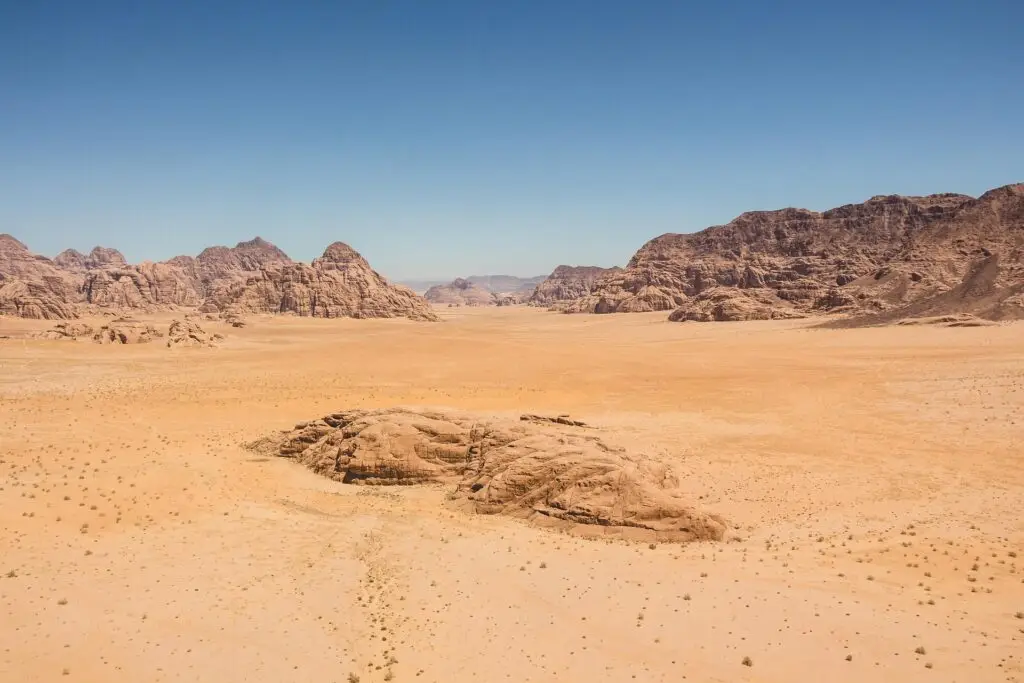
Genesis 26 is the only chapter in the Bible devoted entirely to Isaac. It is not long. In it, he survives a famine, tells a lie his father had already told twice, digs several wells, argues with his neighbors, moves three times, and receives a visit from God. He does not leave the land. He does not found anything. He does not wrestle with anyone. By the end of the chapter he is back where he started — in Beersheba, where his father had planted a tree and called on the name of the Lord — and the story moves on without pausing to note what this means.
What it means is the argument of this essay.
In the previous installment, we examined the price Esau paid for a single meal — a transaction that took only a few verses but whose cost would shape the rest of the book. That story turned on the question of what a man lets go under pressure. This one turns on the question of what a man holds onto — not in crisis, but in the long, unglamorous middle of a life that is mostly weather and neighbors and finding enough water to survive another season. Isaac is not a dramatic figure. He is a steady one. In a book populated by founders and wrestlers and dreamers, steadiness is its own kind of testimony.
He did not dig new wells. He dug the same ones.
Section II
What Gets Lost When Every Generation Must Begin Again
In the early medieval period, a particular practice emerged in the monasteries of Ireland and the continent that historians of ideas have come to regard as one of the most consequential acts of preservation in Western history.
The monasteries copied.
As the Roman administrative world collapsed — the roads unmaintained, the trade networks severed, the schools closed, the literate class scattered or dead — the monks of places like Iona and Bobbio and Monte Cassino spent their lives reproducing manuscripts they had not written, in languages some of them barely read, on subjects they would never teach to anyone outside the walls. They copied Virgil and Pliny and Augustine and Jerome. They copied legal texts and medical treatises and grammars. They illuminated the Gospels with an obsessive, almost violent beauty — not because they had been told to produce art, but because the act of preservation itself seemed to demand something more than mechanical replication. The work was worth adorning. What they were carrying forward was worth the time it took to make it beautiful.
The historian Thomas Cahill, tracing this tradition in his account of how Ireland became an unlikely center of European learning, observed that the monks did not think of themselves as innovators. They thought of themselves as custodians. The distinction mattered enormously: a custodian’s primary obligation is not to improve what has been received but to ensure that it survives long enough to be handed on (Cahill, 1995). Improvement could come later, when there was someone to receive the improved version. First, the thing had to exist. First, the wells had to be open.
The monks understood something that the culture they were living through had forgotten: that civilization is not a condition that maintains itself. It is a practice. It requires people who are willing to spend their lives on the unglamorous work of continuity — not because the work is interesting, but because the alternative is a world in which the next generation has no wells to return to, no ground already broken, no inheritance except the labor of starting from nothing.
Japan’s traditional merchant culture preserved a related insight through the practice known as noren-wake — the formal division of a house’s curtain, the noren that hung at a shop’s entrance bearing its name and crest. When an apprentice had demonstrated sufficient mastery, the master would cut a piece from his own curtain and give it to the apprentice to hang at the door of a new establishment. The gift was not merely symbolic. It was a transfer of identity — of the house’s reputation, its methods, its relationships with suppliers and customers built over generations. The apprentice was not starting fresh. He was carrying a piece of something that already existed, already trusted, already tested, into a new address (Fruin, 1983). He was authorized to be continuous with what he had received, not to replace it.
Both traditions — the monastic copyists and the noren-wake — were operating under the same conviction: that there are moments in history when the most important work a person can do is not to originate but to transmit. When the primary task is not innovation but fidelity. When the wells are already dug and the crucial question is whether anyone is willing to clean them out.
The culture of the contemporary West is deeply suspicious of this conviction. We have constructed an entire vocabulary of denigration for it: legacy systems, institutional inertia, playing it safe, maintaining the status quo. The assumption embedded in this vocabulary is that preservation is what you do when you lack the imagination to create — that fidelity to received forms is a consolation prize for people who cannot produce new ones. The result is a cultural metabolism that discards faster than it can assimilate, that measures significance by novelty, and that has quietly lost the concept of a well as something worth protecting.
Yet Genesis 26 presents an older version of this pattern — older than the monasteries, older than the merchant guilds, older than any of the institutions that have had to learn the same lesson again in their own time. Long before monks carried manuscripts through a collapsing empire, a man walked through a famine-stricken land where the wells his father had dug were stopped with debris, and the covenant that had been sworn to his father needed someone still alive to carry it. The chapter Genesis devotes to him is not about heroism or founding or conquest. It asks a quieter, harder question: what happens after the founder is gone, and the only work left is the work of keeping what was given open?
Section III
Three Passages, One Pattern
The first passage arrives before the wells are mentioned, before the lie is told, before the neighbors arrive with their disputes. It comes in the form of a command:
“Do not go down to Egypt; dwell in the land of which I shall tell you. Sojourn in this land, and I will be with you and will bless you, for to you and to your offspring I will give all these lands, and I will establish the oath that I swore to Abraham your father.”
— Genesis 26:2–3 (ESV)
There is a famine in the land. Egypt is a reasonable destination — it has water when Canaan does not, grain when Canaan is dry. Abraham had gone to Egypt under similar pressure, in Genesis 12, and had come back considerably wealthier, if not considerably more trustworthy. The road was known. The logic was sound.
God tells Isaac not to take it.
The instruction is not arbitrary. It comes with a rationale, and the rationale is explicitly covenantal: I will establish the oath that I swore to Abraham your father. The covenant was made in a specific land, with a specific people, through a specific lineage. Isaac’s departure would not have broken the covenant — God is not so easily foiled — but it would have broken Isaac’s relationship to it. He would have survived the famine. He would not have been the man who stayed in the promised land when the promised land offered him nothing. He would have been the man who left when it got hard, and returned when it was comfortable again. The story of his life would have been different. The promise he was inside would have been harder to locate.
He stayed. He sojourned in Gerar, within the land’s boundary. And then the text records something remarkable: he sowed in that year and reaped a hundredfold. The LORD blessed him (Genesis 26:12, ESV). Not in Egypt. In the difficult land. In the land that was currently failing to sustain itself. The blessing came not after the famine ended but inside it — to the man who had not left.
The second passage comes from a moment of conflict that the text handles with unusual restraint:
“But when Isaac’s servants dug in the valley and found there a well of spring water, the herdsmen of Gerar quarreled with Isaac’s herdsmen, saying, ‘The water is ours.’ So he called the name of the well Esek, because they contended with him. Then they dug another well, and they quarreled over that also, so he called its name Sitnah. And he moved from there and dug another well, and they did not quarrel over it. So he called its name Rehoboth, saying, ‘For now the LORD has made room for us, and we shall be fruitful in the land.'”
— Genesis 26:19–22 (ESV)
The names are doing something the English translation slightly flattens. Esek means contention. Sitnah means enmity — the same root as Satan, the adversary. Rehoboth means broad places, or room. Isaac moves from contention through enmity to room — not by winning an argument, not by superior force, not by legal maneuver, but by continued movement in the same direction. He does not escalate. He does not litigate. He names the fights honestly and then keeps digging.
What the text records is not passivity but a particular kind of intentionality: the refusal to let the disputes determine the destination. The neighbors take the wells. Isaac digs another. He has understood something about where he is and what he is doing that makes the loss of any individual well survivable — because the wells are not the point. The water is the point. And the water will be where he is willing to keep digging.
The third passage arrives at the end of the chapter, when the covenant’s continuity is made explicit in a way that Isaac himself does not seem to have been expecting:
“And the LORD appeared to him the same night and said, ‘I am the God of Abraham your father. Fear not, for I am with you and will bless you and multiply your offspring for my servant Abraham’s sake.'”
— Genesis 26:24 (ESV)
For my servant Abraham’s sake. The blessing on Isaac is anchored to a fidelity that precedes him. He is not receiving a new covenant. He is receiving the continuation of an old one — a covenant that was sworn to his father, that his father honored through his own complicated and imperfect history, and that has not expired. Isaac is the inheritor of something he did not originate. The task before him is not to improve the covenant, not to found a new one better suited to his own situation, but to receive what was given and carry it forward without losing it.
Genesis 26 is unusual among the patriarchal narratives in that its protagonist’s defining quality is not initiative but receptivity. Isaac receives the covenant. He receives the land’s difficulty. He receives his neighbors’ hostility. He receives the divine appearance at Beersheba. What he does not do is depart from what he was given — the land, the wells, the name, the promise. In a book full of men who seize and flee and wrestle, Isaac’s stillness reads at first like absence. It is not absence. It is the hardest kind of presence: the kind that stays when staying is unrewarding, and keeps digging when the neighbors have already taken the last well you dug.
Section IV
The Work That Looks Like Nothing
There is a verse in Genesis 26 that most readers pass over quickly: And Isaac dug again the wells of water that had been dug in the days of Abraham his father, which the Philistines had stopped after the death of Abraham. And he gave them the names that his father had given them (Genesis 26:18, ESV).
Read it again, slowly.
He dug the wells his father had dug. He gave them the names his father had given them. He did not rename them for himself. He did not dig in a new location to claim original discovery. He found the stopped wells, cleared them out, and restored to them the names by which they had been known before the Philistines filled them in. The wells had not moved. The water had not disappeared. What had changed was that someone had blocked access, and what Isaac did was unblock it.
Identity, this passage suggests, is sometimes not a matter of origination but of restoration — not the creation of a new thing but the recovery of a stopped one.
The historian of technology David Edgerton has argued that the most consequential forces in history have typically been not new inventions but old ones — maintained, repaired, kept in service long past the moment when the culture that produced them moved on (Edgerton, 2006). What changes the world, he suggests, is less often novelty than persistence: the unglamorous commitment to making something already built continue to work.
This is a difficult claim for a cultural moment that has organized itself almost entirely around the category of the new. The startup economy rewards founders. The academic economy rewards original contributions. The media economy rewards disruption. What none of these systems rewards — what they actively resist rewarding — is the person who shows up every morning to maintain what someone else built, who clears the debris from the old wells, who gives the restored water source the name it had before anyone stopped it.
Yet Genesis is careful not to simplify the man who does this work. The essay’s argument could settle too easily into admiration if the text allowed it, and the text does not. Genesis 26 records, almost in the same breath as the well-digging, that Isaac told the men of Gerar that Rebekah was his sister. Not his wife — his sister. It is the same lie Abraham told twice, in Egypt and in Gerar, and it is told in Gerar again, to the same king, by the son. Abimelech sees them through a window — the word suggests intimacy, private tenderness — and confronts Isaac with the same exasperation his father must have provoked: What is this you have done to us? One of the people might easily have lain with your wife, and you would have brought guilt upon us (Genesis 26:10, ESV).
The man who reopened Abraham’s wells also repeated Abraham’s fear. Continuity, Genesis suggests, transmits the failures of a generation as faithfully as its strengths. Isaac did not inherit only the covenant and the water. He inherited the particular shape of his father’s anxiety — the instinct, under threat, to protect himself by concealing what was most valuable to him. The wells carry the father’s name. So does the lie.
This is the covenant’s recurring pattern, and Genesis 26 holds it without resolution: the instruments of preservation are not pure vessels. They are ordinary people who carry something they did not originate through circumstances they did not choose, sometimes faithfully and sometimes badly, and who nonetheless do not put it down. Isaac’s steadiness is real. His fear is also real. Both travel together through the chapter, as they had through his father’s life before him, as they will through his son’s life after. The covenant moves through the mixture, not around it.
The pattern Genesis 26 traces — stay in the difficult land, clear the stopped wells, move through the disputes without becoming them, arrive at the place where the LORD has made room — is not a pattern about moral excellence. It is a pattern about orientation. Isaac’s attention, despite his failure at Gerar, never shifts from the fundamental thing: the water, the covenant, the names his father gave, the land where he was told to stay. The disputes are real. The famine is real. The lie is a real failure, inherited and repeated. But none of these things moves him off the bearing. He stays where he was told to stay. He digs where the wells already were. He calls the water by its old name. And at Beersheba, the LORD appears and says: I am with you.
The tamarisk was still there. The name was still there. The well was there, and the water was in it.
Section V
Some Generations Are Called to Keep the Wells Open
Abimelech came to Isaac at Beersheba with his military commander and his adviser. He had expelled Isaac from Gerar when Isaac grew too prosperous. Now he traveled to find him again — not to continue the dispute but to propose a covenant. We see plainly that the LORD has been with you (Genesis 26:28, ESV). It is one of the more striking sentences in the patriarchal narratives: the man who told Isaac to leave now asks Isaac for a formal guarantee of peace.
He does not explain what changed his mind. He does not need to. What had been visible in Isaac’s conduct — the refusal to escalate, the steady movement toward the next well, the hundredfold harvest in the famine year, the return to Beersheba — had constituted a kind of argument that Abimelech had been watching and could not fully account for except by reference to the one apparently traveling with Isaac.
We see plainly that the LORD has been with you.
Not: we see plainly that you are impressive. Not: we see plainly that you are powerful, or clever, or original. We see plainly that you are accompanied. That the water is where you dig. That the land yields when you stay. That the disputes do not stop you, only slow you. That where you go, the broad places eventually appear.
This is the testimony Genesis 26 preserves for the quietest man in the book.
Isaac is not the patriarch who left everything and went. He is not the one who wrestled through the night until his name was changed. He is not the one whose dreams reshaped the economy of an empire. He is the one who stayed in the difficult land, who cleared the stopped wells, who gave the water back its father’s name, who moved when the neighbors took what he had found — and moved again when they took that too — moving always in the same direction, always toward the broad place, always inside the land where the covenant had told him to remain.
There are generations in history whose primary calling is not to found but to preserve — not to discover the water but to clear the debris from the wells that already reach it. The monastic copyists knew this. The masters who gave away their curtains knew this. Every person who has ever maintained an institution, a tradition, a practice, a family against the pressure of entropy and cultural obsolescence has known it, even when the culture around them could find no vocabulary for what they were doing that did not sound like failure.
Genesis 26 gives that work a name. It calls it dwelling in the land. It calls it digging again the wells. It calls it giving back the names. And at Beersheba, when Isaac builds an altar and calls on the name of the LORD and pitches his tent and his servants dig a well — the text uses language almost identical to what Abraham used in the same place, a generation before.
Some generations are called to originate. Others are called to keep the wells open. The covenant has needed both — and the water has always been where someone was willing to keep digging.
1 Alter, R. (1981). The Art of Biblical Narrative. Basic Books.
2 Wenham, G. J. (1994). Genesis 16–50. Word Biblical Commentary, Vol. 2. Word Books.
3 Brueggemann, W. (1982). Genesis. Interpretation: A Bible Commentary for Teaching and Preaching. John Knox Press.
4 Cahill, T. (1995). How the Irish Saved Civilization. Nan A. Talese / Doubleday.
5 Fruin, W. M. (1983). The Japanese Enterprise System: Competitive Strategies and Cooperative Structures. Oxford University Press.
6 Edgerton, D. (2006). The Shock of the Old: Technology and Global History since 1900. Oxford University Press.