The Woman Who Sells Water for Bread
Every morning she draws water. Every afternoon she sells it. If enough people buy it, her children eat that night.
If they don’t, the children go to bed hungry, and they don’t make it to school the next morning — a hungry child cannot sit still long enough to learn.
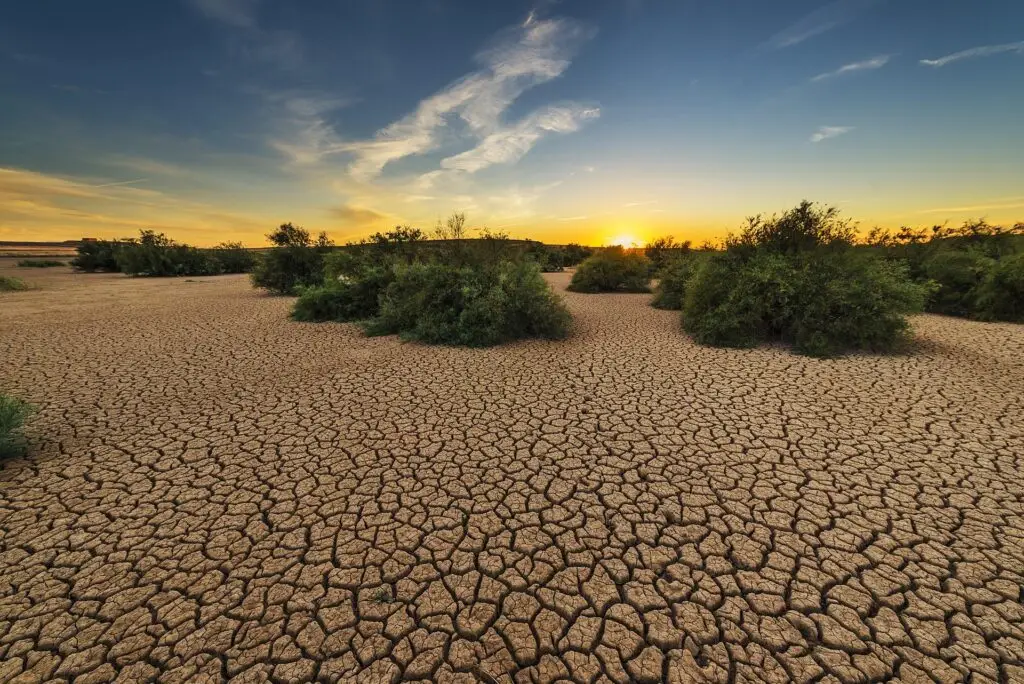
This is southern Madagascar in the early months of 2026, at the tail end of what meteorologists have called one of the driest stretches the region has recorded, now compounded by two cyclones that struck ten days apart.
There is no war here. Yet the arithmetic of hunger looks remarkably similar.
By February 2026, close to 1.6 million people across Madagascar’s Grand Sud and Grand Sud-Est were living inside a food crisis severe enough that humanitarian agencies were tracking it village by village, district by district. No border has been crossed. No granary has been burned. And yet the numbers read almost exactly like the numbers from a war zone.
Ask an American reader what a famine looks like, and they will likely describe a scene from history — a newsreel, a black-and-white photograph, a war zone. They will rarely picture a woman standing at a well, selling water by the cupful, in a country not currently at war with anyone at all.
That gap between the image and the reality is where this piece wants to sit — because it is also, as it turns out, where an old set of texts and a fairly recent economic theory happen to meet.
What the Blight Actually Killed
To understand why Madagascar’s crisis resists the categories most people bring to the word “famine,” it helps to go back to the famine that shaped the modern imagination of the word in the first place: Ireland, 1845 to 1852.
The physical trigger was narrow — a fungal blight, Phytophthora infestans, that turned potato fields black within days of infection. Ireland’s rural poor depended on a single crop for the overwhelming share of their calories, a dependency that made one bad harvest catastrophic in a way wealthier, more diversified societies were spared.
But the blight alone doesn’t explain why roughly a million people died and another million emigrated, many on ships so crowded and disease-ridden that the Irish themselves called them coffin ships. Ireland continued exporting grain, livestock, and butter to England throughout the famine years — food that moved out of the country under armed guard while its own people starved beside the roads that carried it to port. Landlords continued collecting rent from tenants who had nothing left to eat. The soil, in other words, was never the whole story.
The economist Amartya Sen later gave this pattern a name that became foundational to famine studies: he argued that famines are rarely simple shortages of food, but failures of “entitlement” — the social and economic arrangements determining who has a legitimate claim on food that already exists.¹ Sen’s argument permanently changed how economists think about famine — not as a failure of production alone, but as a failure of access. Ireland in the 1840s had food. It did not have a system that let its poorest citizens claim any of it.
Madagascar in 2026 is not colonial Ireland. No occupying power directs exports past the mouths of the hungry. But the underlying pattern — a climate shock landing on a population with almost no financial buffer, so that one failed rainy season becomes a full humanitarian emergency — is a modern variation on what Sen described. Families in the Grand Sud have faced this kind of shock so often in recent years that they have stopped fully recovering between events, each new drought or cyclone arriving before the last one has been absorbed.
It is rarely the disaster itself that kills. It is what a society had already decided, long before the disaster, about who gets to eat when the harvest fails.
An Old Word for a New Drought
Scripture, read this way, turns out to be interested in almost exactly the question Sen was asking. Its famine stories are rarely just weather reports; they are recurring tests of how a community distributes what it has and honors the claims of those who have the least power to enforce them — an institutional test bed, in effect, centuries before anyone had the economic vocabulary to name it that way.
The clearest example is Joseph in Egypt. Reading it as a pattern of stewardship rather than prophecy, Genesis 41 describes a seven-year famine anticipated years in advance, and a nation that used the years of abundance to store grain against the years of want:
“And the seven years of plenteousness, that was in the land of Egypt, were ended. And the seven years of dearth began to come, according as Joseph had said: and the dearth was in all lands; but in all the land of Egypt there was bread.” (Genesis 41:53–54, KJV)
The chapter is less interested in the famine itself than in the administration of it — the fact that someone, years earlier, made the deliberate choice to prepare, and built a system capable of honoring that choice when the crisis actually arrived.
A second and quieter thread runs through Ruth. When famine struck Bethlehem, Naomi’s family crossed into Moab as economic refugees, a decision that reshaped the rest of the narrative and, eventually, the genealogy of David himself. Hunger scattered the family; covenant faithfulness gathered one back into Israel. Famine in Ruth is not a backdrop — it is the engine that sets the entire story of loyalty, migration, and restoration into motion, and it insists, almost as an aside, that the claims of a foreign widow on a foreign field were not lesser claims.
A third pattern appears in the gleaning laws of Leviticus, which instruct landowners not to harvest the corners of their fields or gather every fallen stalk, but to leave them for the poor and the foreigner (Leviticus 19:9–10). The law transformed generosity from private virtue into public institution — a permanent, structural provision for scarcity, written into the mechanics of an ordinary harvest rather than left to the mood of any individual landowner in any individual year.
Scripture does not require that every catastrophe be interpreted as divine judgment; it does, however, insist that societies eventually reveal the moral conditions under which they have chosen to live.
Three different responses to hunger, then — storage, migration, and institutionalized gleaning — sit inside the same textual tradition, none offering a tidy verdict on why the rain didn’t come, but all assuming that what a community does after the rain fails is the part that actually matters.
The Numbers Behind the Well
The scale of what’s unfolding in Madagascar is worth sitting with in specifics rather than abstractions — though only a handful of numbers are worth holding onto.
By February 2026, WFP assessments placed roughly 1.57 million people across the island in food insecurity, a figure projected to climb past 1.8 million as the lean season deepened. FEWS NET’s market data, gathered district by district, found staple maize prices in the country’s south climbing well above both the previous year and the five-year average, even as wages for agricultural labor — the primary income source for many rural households — fell over the same stretch.²
Put plainly: the price of food rose while the money available to buy it fell, at the same moment, in the same households. This is what Sen called the collapse of entitlement, unfolding in something close to real time: the food has not disappeared from the region — it has simply moved beyond the reach of the people who need it most.
WFP’s own emergency operation, meanwhile, was short $18.3 million, a gap that had already forced the agency to cut planned assistance in the hardest-hit southern communes to a fraction of the households originally targeted. That shortfall is not unique to Madagascar. Humanitarian funding for food, agriculture, and nutrition assistance across all crisis contexts fell an estimated 59 percent between 2022 and 2025, according to the Global Network Against Food Crises — a decline the network attributes to the cumulative effect of shrinking aid budgets worldwide, arriving at precisely the moment the share of the global population facing severe food insecurity had doubled. Madagascar’s shortfall, in other words, is a local symptom of a global contraction, not a story about any single government’s failure to act.
None of it traces back to a single villain. It traces back to a sequence: a decade of below-average rainfall, cumulative crop losses that left households with no savings to absorb a bad year, then two cyclones landing within ten days of each other on top of an already exhausted system — arriving at precisely the moment international humanitarian funding was contracting rather than expanding.
This is the point where the biblical pattern stops feeling like an ancient artifact and starts feeling uncomfortably current. Joseph’s Egypt survived its seven-year famine not because the famine was mild, but because someone had already built storage before the crisis began. Madagascar’s Grand Sud, by contrast, has been living inside a version of the lean years for most of the last decade, without ever fully reaching the years of plenty that would have let it store anything at all.
The gleaning laws of Leviticus assumed a baseline generosity built into ordinary economic life — food left in the corners of the field not as emergency relief, but as a permanent feature of how a harvest was supposed to work. The modern equivalent of a gleaning law is not a single donation drive; it is a funding stream that doesn’t disappear the moment a crisis stops making headlines.
That is precisely what collapsed in the WFP’s own account of the shortfall — not a lack of compassion in the initial response, but an inability to sustain it once the cyclones fell out of the news cycle.
The Well Doesn’t Care Whose Fault It Is
There is a temptation, reading about a crisis this far from American shores, to look for someone to blame — a government, an aid agency, a policy failure somewhere upstream. Madagascar’s story resists that temptation more than most, because there is no single actor whose failure explains what happened here. There is only a landscape worn thin by repetition, and a funding system that keeps arriving late to crises it could, in principle, see coming.
That absence of a villain is the harder lesson. It is easier to be angry at a government than to reckon with the slower, more diffuse question of what a society — any society, including one as wealthy and as far away as our own — chooses to treat as a permanent obligation versus a temporary act of charity.
Wealth does not exempt a nation from famine; it merely changes the form scarcity takes. A drought-stricken village runs out of grain. A wealthy, distant society runs out of something quieter — attention, patience, the willingness to keep storing once a crisis has stopped being new. The short attention span of prosperous, faraway societies is not a footnote to disaster response — it functions, in practice, as one of its structural causes, no less real for being harder to name than a drought or a blight.
The woman selling water by the cupful near Ambovombe is not waiting for a verdict on who is responsible for the drought. She is waiting to see whether enough people will buy water today that her children eat tonight — and whether, next season, anyone will still be paying attention.
The rains will return. They always do, eventually. The harder question — the one this pattern keeps asking, across a century and a half of famines that were never really about the failure of a crop — is whether anyone intends to be there, with something stored, the next time it runs dry.
¹ Amartya Sen, Poverty and Famines: An Essay on Entitlement and Deprivation (Oxford: Clarendon Press, 1981).
² FEWS NET, Madagascar Food Security Outlook, February 2026: maize prices in Tsihombe 21% above the prior year and 27% above the five-year average; dried cassava prices up 25% year-over-year; agricultural daily wages approximately 27% below the prior year and 15% below the five-year average.