Section I
He Had Already Been Warned, and He Still Could Not Move His Feet
On the morning of August 4, 2020, residents of Beirut woke to a city that had been partially unmade in a single second. The port explosion — triggered by 2,750 tonnes of ammonium nitrate stored, unsecured, for six years in a warehouse that multiple government officials had been formally warned about — killed more than 200 people, injured 6,000, and left an estimated 300,000 homeless (Human Rights Watch, 2021). The warnings had been filed. The storage had continued. The city had waited without knowing it was waiting.
There is a passage in Scripture that knows this pattern. Not the explosion itself — but the paralysis before it. The moment when the warning has been delivered, the door is open, the road out is clear, and the man who should be moving is still standing at the threshold, looking back at what he is about to lose.
In the previous installment, we examined Genesis 18 — Abraham’s intercession before God on behalf of a city he did not inhabit, the argument conducted in descending numbers, the question pressed against the character of the Judge of all the earth: Shall not the Judge of all the earth do what is just? The negotiation was heard. The terms were set. Ten righteous people would have been enough.
Genesis 19 opens the morning after that negotiation closed. Ten could not be found.
Section II
Cities That Burned Because They Could Not Read the Smoke
The destruction of a city is rarely a surprise to everyone inside it. What history records, repeatedly, is a more specific tragedy: communities in which enough people knew, and not enough people acted on what they knew.
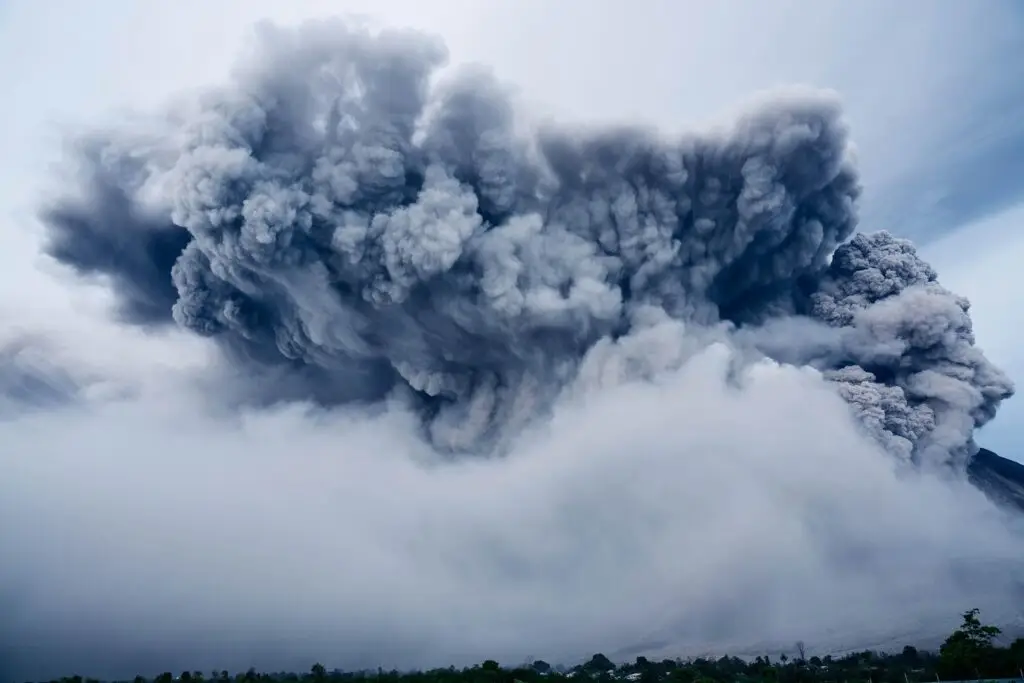
Pompeii is the most archaeologically preserved example. Pliny the Younger’s letters to Tacitus, written roughly two decades after the eruption of Vesuvius in 79 CE, describe a population that watched the mountain produce an unusual cloud formation for hours before the pyroclastic surge arrived (Pliny the Younger, Letters, Book VI). Archaeologists have since found the remains of people who apparently returned to their homes after the initial tremors — going back for possessions, settling accounts with what they owned — and did not leave again in time. The warning was available. The attachment was stronger.
The twentieth century repeated this pattern in slower, more administrative forms. The decisions many Jewish families across central Europe made in the 1930s — to stay, to wait, to calculate that the situation could not be as extreme as the worst interpretation suggested — were not failures of intelligence. They were entirely rational responses to uncertainty compounded by communal belonging. Some communities organized their departure. Many did not (Wasserstein, On the Eve, 2012). The smoke had been visible for years. The mind, repeatedly, found other explanations for it.
The sociologist Lee Clarke described this as “fantasy documents” — the formal procedures organizations maintain not because they will function but because their existence allows normal operations to continue without forcing a direct reckoning with what could go wrong (Clarke, Mission Improbable, 1999). The Beirut warehouse had been inspected. Reports had been filed. The ammonium nitrate stayed.
Genesis 19 is not a text about regulatory failure or volcanic eruption. But it is, among other things, a text about what happens to people who have received a clear warning — an unambiguous one — and find, in the critical moment, that they cannot make their feet move through the door.
Section III
The Angels at the Gate, and the City That Organized Against Them
The chapter opens at evening, at the gate of Sodom. Two figures arrive — the same two who departed from Abraham’s tent at the end of Genesis 18. Lot sees them and does what his uncle had done that afternoon at the tent door: he rises, bows, and insists they come home with him. The hospitality is urgent in a way Abraham’s had not needed to be. Abraham’s invitation carried the warmth of abundance. Lot’s carries the weight of someone who knows what happens to strangers who sleep in the public square of this particular city.
What follows is one of the most disturbing scenes in the patriarchal narratives. Before Lot’s guests can sleep, the men of Sodom — the text specifies all of them, young and old, from every part of the city — surround the house and demand that the visitors be handed over. Lot steps outside and offers his two daughters instead. No reading softens that offer. What the scene establishes, structurally, is the character of a community that has not merely tolerated violence against the stranger but has organized itself around it — made it, in some sense, the civic practice.
The rabbinic tradition preserves an extended portrait of Sodom’s social character that goes beyond this single night. What that tradition suggests, across several strands of commentary, is that Sodom had effectively institutionalized hostility to outsiders — formalized and enforced by communal pressure (Sanhedrin 109a, Babylonian Talmud). Whether that reading is historically recoverable or is interpretive elaboration built on the narrative’s own logic, it frames the contrast the text is drawing: the hospitable tent and the hostile city are not incidental settings. They are two answers to the same question about who belongs inside the circle of human obligation.
Three passages carry the theological weight of what follows:
— Genesis 19:24–25 (ESV)
— Ezekiel 16:49 (ESV)
— 2 Peter 2:7–8 (ESV)
The Ezekiel passage is essential and is often the one omitted from popular treatments of this chapter. The prophet, writing centuries after the event, identifies the core of Sodom’s failure not as a single category of transgression but as the compound failure of a prosperous community that had excess and chose to organize it in ways that excluded the vulnerable. The violence at Lot’s door was the symptom. The diagnosis runs deeper.
Section IV
The Man Who Had to Be Pulled Through the Door
The angels deliver their warning in Genesis 19:12–13 with the clarity that the situation requires: the city is about to be destroyed, and Lot’s family must leave now. Lot goes to his sons-in-law and tells them what is coming.
They thought he was joking.
The warning that had come through angels who had just blinded an entire mob — attached to the most dramatic evidence of divine intervention anyone in Sodom had witnessed in living memory — was received as humor. The city was hours from destruction. The men laughed.
The social psychology of what researchers call normalcy bias is well-documented in disaster studies. When a situation falls sufficiently outside ordinary experience, the mind defaults to the interpretation that most closely resembles the familiar, even when direct evidence points elsewhere (Kahneman, Thinking, Fast and Slow, 2011). People who have lived somewhere without experiencing catastrophe systematically underestimate its probability, even when warned, because the accumulated experience of safety operates as stronger evidence than any received alert. Lot’s sons-in-law were not uniquely foolish. They were doing exactly what human cognition is structured to do.
The problem is that Genesis 19 does not grade on a curve.
Then comes the moment that has drawn more commentary than almost any other verse in the chapter. As dawn breaks, the angels urge Lot to hurry. The text records what follows:
— Genesis 19:16 (ESV)
Two words in English. Three in Hebrew. He had been warned directly by divine messengers. He had watched the men of Sodom go blind at his door. He knew what was coming. And he stood there.
The angels take him by the hand — and his wife, and his two daughters — and bring them outside the city by force. The text is explicit: “the LORD being merciful to him” (Genesis 19:16, ESV). Lot is not applauded for his spiritual perception. He is dragged, tenderly, through a door he cannot make himself walk through.
Here the text requires a moment of honest theological reckoning. **Genesis never presents Lot as Abraham’s equal.** He is righteous under duress — 2 Peter confirms that his soul was tormented by what he witnessed around him — but he is also compromised in formation: a man who chose the well-watered plains of Sodom in the first place, who embedded himself deeply enough in the city’s social fabric to sit at its gate, who, in the crisis moment, offered his daughters to the crowd. The text holds all three truths simultaneously. He was righteous. He was compromised. He was rescued by mercy rather than merit. The rescue does not erase the compromises; it encompasses them.
A 2023 Pew Research survey of American religious practice found that a declining share of self-identified Christians report that their faith shapes their major life decisions in operationally significant ways — where they live, how they allocate resources, how they engage the pressures around them (Pew Research Center, 2023). The belief persists. The operational weight of it contracts. The sociology does not prove a spiritual diagnosis. But it traces the same outline: communities that have absorbed enough of the surrounding culture’s assumptions that the call to live differently has begun to register, to some internal frequency, like something between quaint and implausible.
What the angels’ grip on Lot’s wrist restores, in the text, is not his courage. It is his momentum. Sometimes the merciful thing is not the argument that persuades but the hand that moves the feet the argument could not.
Section V
Carried Out Because Someone Else Had Made the Argument
Lot’s wife looks back. The road behind her contains everything she had built her life inside — the house, the city, the social world that had shaped whoever she had become over the years in Sodom. The text does not narrate her interior state. It records only the action and its consequence: she looked back, and became a pillar of salt.
The image has generated more allegorical elaboration than almost any other single verse in Genesis. What the text itself offers, without elaboration, is the contrast: Lot’s wife turns back toward a city that is already gone. The pillar is not, in the text, a punishment for sentiment. It is the physical expression of a person who had already turned back before her feet did.
Jesus references her once, in a single line, without explanation: “Remember Lot’s wife” (Luke 17:32, ESV). The context is his teaching on the coming of the Son of Man — the instruction to those on the rooftop not to go back inside for possessions, to those in the field not to turn back. The memory of Lot’s wife is not an illustration of divine harshness. It is an instruction about the direction in which survival lies.
Genesis 19:29 contains the verse that reframes the entire chapter in retrospect: “So it was that, when God destroyed the cities of the valley, God remembered Abraham and sent Lot out of the midst of the overthrow when he overthrew the cities in which Lot had lived.”
Lot did not argue his way out. He was carried. The argument that preceded his rescue had been made by someone else, on a road outside the city, the afternoon before — by a man who stood before the Judge of all the earth and pressed the case for the righteous until the terms were set. Abraham’s intercession did not save the city. But it determined who was brought through the fire.
The intercessor who prays for a community he does not inhabit is not engaged in a peripheral spiritual exercise. He is, in the logic of Genesis 18–19, establishing the terms under which rescue remains possible for those too paralyzed to ask for it themselves.
Religious communities across the modern West find themselves in a moment with some structural resemblance to Lot’s position inside Sodom: present in institutions under visible pressure, holding convictions the surrounding culture no longer shares, navigating the question of whether deeper engagement or strategic withdrawal is the more faithful response. Genesis 19 does not resolve that question. It does, however, offer a diagnostic: a man so formed by his environment that he had to be physically extracted from it, rescued not by his own spiritual clarity but by the mercy of a God who remembered the intercession of a man waiting at a tent in the hills.
The smoke rises from the valley. Abraham, standing on the height where he had argued with God the afternoon before, looks down and sees what the negotiation did not prevent. The text records no speech. Just the smoke. And the covenant, continuing on a calendar the burning cities below did not control.
Babylonian Talmud, Sanhedrin 109a. [Cited as representative of one strand of classical rabbinic interpretation; not equivalent to Scripture.]
Clarke, L. (1999). Mission improbable: Using fantasy documents to tame disaster. University of Chicago Press.
Human Rights Watch. (2021). Lebanon: Beirut port explosion — One year on, no accountability. https://www.hrw.org/news/2021/08/03/lebanon-beirut-port-explosion
Kahneman, D. (2011). Thinking, fast and slow. Farrar, Straus and Giroux.
Pew Research Center. (2023). Religious landscape study: Faith and daily life. https://www.pewresearch.org
Pliny the Younger. Letters, Book VI, Letters 16 and 20. (Trans. B. Radice, 1963). Penguin Classics.
Sarna, N. M. (1966). Understanding Genesis: The heritage of biblical Israel. Schocken Books.
Wasserstein, B. (2012). On the eve: The Jews of Europe before the Second World War. Simon & Schuster.