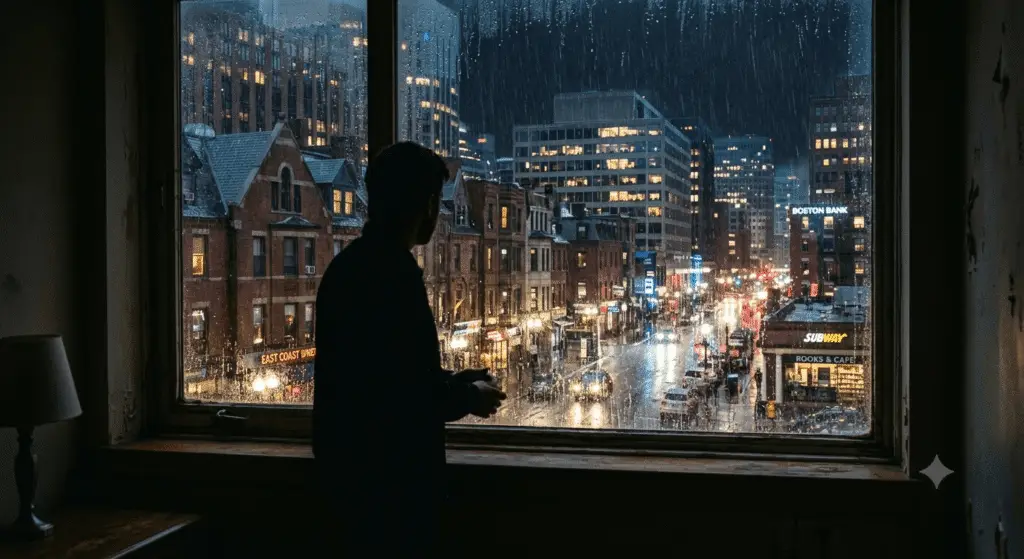
HOOK
A question that isn’t the one the jury was asked to decide
There’s a question I can’t stop asking, and it isn’t the one the jury was asked to decide.
On July 23, 2026, a Delaware Superior Court judge signed a Certificate of Innocence for a man named Jermaine “Marlow” Wright and ordered his 1992 murder conviction expunged. A Certificate of Innocence is not simply an acquittal, and it is rarer than most exonerations: Delaware issues one only when the record affirmatively establishes that a person did not commit the crime, not merely that the state failed to prove it did. It was not the day Wright walked free — that had already happened, quietly, a decade earlier, in September 2016, when a no-contest plea ended his case without technically declaring him innocent. The certificate that followed, almost ten years after his release and thirty-four years after his original conviction, was the moment the state finally put the word innocent into the record. Wright is now the 203rd person exonerated from death row in the United States since 1973, according to the running count kept by the Death Penalty Information Center (2026) — a tally that updates, by its nature, every time another case closes. The same organization states the wider pattern in blunt terms of its own: for roughly every eight executions this country has carried out since 1973, one other death sentence has instead ended in exoneration (Death Penalty Information Center, 2026).
Wright had been convicted in 1992 in the killing of a Delaware liquor-store clerk named Phillip Seifert. No physical evidence tied him to the scene. What convicted him was a confession he gave while under the influence of heroin, and the testimony of a jailhouse informant that prosecutors later admitted they had reason to doubt and never disclosed (Death Penalty Information Center, 2026).
I read the timeline twice. Not the certificate itself — I’ve never seen it — but the shape of it: a jury, at some point in 1992, looked at a confession and an informant’s word and agreed, unanimously, that they were certain enough to sentence a man to die.
Two days ago, in the piece on unearned grace, we sat with the idea that mercy is never something a person can produce by being good enough to deserve it. Today the question moves one room earlier. Before grace can be extended or withheld, twelve strangers first have to decide whether a person deserves judgment at all — and Wright’s case is a reminder of how long it can take, even after the record is corrected, for the word certain to be pried loose from the word correct.
In 1957, a film that performed only modestly in its own theatrical run put that gap on screen and left it there for ninety-six minutes, with no music, no set change, and no easy resolution. It has outlasted almost everything released that year. It’s still assigned in law schools. And it still asks, more precisely than most sermons manage to, what a person owes another person before they’re willing to call them guilty.
HISTORICAL CASE
A live drama that nearly disappeared, then outlasted almost everything
12 Angry Men did not begin as a film. It began as a live, hour-long television drama called Twelve Angry Men, written by Reginald Rose and directed by Franklin Schaffner, broadcast on CBS’s Studio One on September 20, 1954. It won three Emmy Awards — for Rose’s writing, Schaffner’s direction, and Robert Cummings’s performance as the lone dissenting juror. Rose had written it after serving on an actual jury earlier that year, in a manslaughter case in New York. He later described the eight-hour argument that followed the jury’s first vote as far more consequential to him than anything he’d expected walking into the courthouse — not because of what the jury decided, but because of how close the room came to deciding it without really examining what it thought it knew.
Two years after the television broadcast, Henry Fonda — who had seen it and wanted a vehicle he could both produce and star in — asked Rose to expand the teleplay into a feature film. They made it together, through Fonda’s own production company rather than a major studio, and Sidney Lumet directed it as his feature debut. It opened in 1957 to strong reviews and an Academy Award nomination for Best Picture, but performed only modestly at the box office — the film that decades later would become one of the most frequently taught in American law schools nearly disappeared in its own theatrical moment, before finding its real audience later, in television reruns and classrooms.
The story is spare enough to describe in a sentence: a jury deliberates the fate of a teenager accused of stabbing his father to death, in a case carrying a mandatory death sentence. The first vote is eleven to one for guilty. Juror 8 — Fonda’s role — doesn’t argue that the boy is innocent. He argues only that no one in the room has actually examined what they think they know. Over the length of one sweltering afternoon, evidence that seemed airtight at four o’clock — a switchblade the boy claimed to have lost, an old man’s testimony that he heard a threat and then a body fall, a woman’s claim that she watched the killing through the windows of a passing elevated train — comes apart, not because anyone produces new evidence, but because someone finally asks how sure a person can really be. Decades of later research on eyewitness identification would confirm what the jury discovers by trial and error inside that one room: a witness’s confidence and a witness’s accuracy are not reliably the same thing, however identical the two can feel from the inside.
The film arrived at a particular moment in American life. This was the high tide of Cold War consensus culture, only a few years removed from congressional hearings that had made dissent itself feel like a form of suspicion. Rose never mentions McCarthy by name, but the shape of the story — one man declining to go along with the room, absorbing contempt for it, refusing to explain his hesitation as anything more than “I just want to talk” — was legible to a 1957 audience without a footnote. The deeper question the film shares with that moment in American politics is one that outlives both: why do people go along with a room when they privately suspect something in it is wrong? Fear of standing out, fatigue, the desire to be finished and go home — the same forces that kept the Studio One audience of 1954 uneasy about naming names are, almost unchanged, the forces Juror 3 and Juror 7 are fighting in a jury room three years later.
What has kept the film in circulation for seven decades, though, is less its politics than its structure. Legal scholars have used it as a case study for exactly what a fictional jury gets right and wrong about how real juries actually behave.1 The comparison matters, because the most famous empirical study of real American juries — Harry Kalven and Hans Zeisel’s mid-century survey of trial judges, published as The American Jury — found that in roughly nine cases out of ten, the jury’s final verdict matches whichever side held the majority on the very first vote.2 An eleven-to-one reversal, in other words, is not the normal outcome of deliberation. It is closer to the exception the film is built around precisely because it almost never happens.
BIBLICAL LENS
What biblical law recognized about human testimony
Scripture is unusually specific about the mechanics of judgment — not just its outcome, but the conditions under which a person is permitted to reach one. Three passages sit underneath everything the jury room in this film gets right, and they build on each other in a fairly precise order: first the evidence, then the character of the one judging, then the judge’s own standing to judge at all.
The first concerns evidence, buried in a legal code most modern readers skip past:
“One witness shall not rise up against a man for any iniquity, or for any sin, in any sin that he sinneth: at the mouth of two witnesses, or at the mouth of three witnesses, shall the matter be established.”
— Deuteronomy 19:15 (KJV)
This is not a suggestion. It is a structural safeguard against the exact failure the jury in the film almost commits: a single confident voice, a single vivid memory, treated as sufficient grounds to end a life. The logic is plain — human testimony is fallible, so judgment requires corroboration, not conviction. The old man’s testimony in the film is one witness. The woman on the elevated train is a second. Both, examined closely, turn out to be far less certain than they first appeared. There’s a name sometimes given to the discipline this law demands: not simply admitting a person might be wrong, but recognizing that a room full of people agreeing with each other can generate more confidence than the evidence in front of them actually earns. Deuteronomy doesn’t use that language, but it assumes exactly that danger, which is why it insists on corroboration instead of trusting a single strong impression, however sincerely held.
The same chapter doesn’t stop at requiring multiple witnesses. It goes on to prescribe what happens if a witness is later shown to have lied: the false witness bears the same penalty he tried to inflict on someone else (Deuteronomy 19:16–19). It’s a detail worth sitting with in Wright’s case specifically, since what convicted him wasn’t only a hasty room — it was a jailhouse informant’s testimony that turned out to be false, offered by prosecutors who, the record now shows, had reason to doubt it. Deuteronomy doesn’t only ask jurors to be careful. It holds witnesses accountable for what their words can cost someone else.
The second concerns the character required of the one judging, in the summary verse the book of Micah builds toward:
“He hath shewed thee, O man, what is good; and what doth the LORD require of thee, but to do justly, and to love mercy, and to walk humbly with thy God?”
— Micah 6:8 (KJV)
Justice and mercy are not presented here as competitors, one softening the other. They are paired, in the same breath, as one requirement — which is harder than either alone. A room that moves straight to conviction without patience has not done justice; it has only done speed. A room that refuses to convict anyone, out of misplaced compassion, has not done mercy; it has abandoned whoever was actually wronged. Micah’s God asks for both, held together, which is close to the tension Juror 8 sits inside for ninety minutes: not “let him go,” but “slow down enough to actually look.”
The third concerns the judge’s own standing — a scene rather than a verse, the account of a woman brought before Jesus in John 8, accused, with her accusers holding stones already in hand.3 Jesus does not dispute the charge against her. He asks the accusers to examine themselves before they act: the one without sin among them should be the first to throw. One by one, beginning with the eldest, they leave. The text never explains what changed in them. It only records that they left. Whatever happened, it made the confident certainty of a moment before no longer available to them.
Scripture does not treat every verdict a room reaches as automatically righteous just because it was unanimous; it treats unanimity itself with a certain suspicion, and asks whether the people agreeing have looked as closely at themselves as they looked at the accused. None of this claims that every conviction is unjust, or that hesitation is a virtue on its own. It claims something narrower — that the biblical pattern consistently slows down the moment before judgment, and puts the burden of proof on the judges, not the judged, to account for what they brought into the room.
PATTERN INSIGHT
The gap between certain and correct
Certainty and correctness are not the same thing, and the gap between them is where nearly every case like Wright’s actually lives. Since 1973, at least 202 people sentenced to death in the United States have later been proven innocent and exonerated, a figure that crossed into 203 with Wright’s case this July (Death Penalty Information Center, 2026). The causes cited most often aren’t exotic: official misconduct, false or mistaken testimony, and forensic evidence that seemed authoritative at trial and was later shown to be far weaker than presented. None of that is a story about villains. It is a story about rooms that moved toward a conclusion with more confidence than their evidence actually supported.
That is the exact failure the jury in 12 Angry Men almost commits in real time, and it’s worth noticing what actually interrupts it. It isn’t new evidence walking through the door. What stops the room is one person asking the others to explain, out loud, why they’re so sure — and watching several of them discover, mid-sentence, that they can’t. Juror 3’s certainty turns out to be about his own estranged son, not the boy on trial. Juror 10’s certainty turns out to be about where the boy grew up, not what he did. Juror 7 wants a verdict mostly because he has tickets to a ballgame. None of these men think of themselves as unfair.
Prejudice rarely announces itself. It arrives dressed as certainty.
That distinction matters, because not every fast judgment is prejudice — pattern recognition built on real experience is not the same thing as bias built on fear or stereotype, and the honest difficulty is that from inside a single confident moment, the two can feel identical. The discipline the film dramatizes is not “distrust your instincts.” It’s closer to asking whether an instinct could survive being said out loud, to a room, with reasons attached.
This is where the John 8 scene stops being a story about mercy and becomes something closer to a diagnostic. The accusers in that scene weren’t wrong that a law had been broken. What stopped them wasn’t a legal argument; it was being asked to hold themselves to the same scrutiny they’d brought to her. Juror 8 does something structurally identical, without a word of Scripture in the script: he keeps turning the room’s attention back onto itself. Not “prove he’s innocent” — he never claims that — but “prove, to yourselves, that you’re certain, and not simply tired, hot, or in a hurry to be somewhere else.”
Modern jury research gives that instinct an uncomfortable footnote. If Kalven and Zeisel are right that first-ballot majorities decide the outcome roughly nine times in ten, then the film is not really describing how deliberation normally works — it’s describing the rare case where it works as intended. That should complicate the way this story gets told. The virtuous dissenter is not the person who refuses to believe anything. It is the person who refuses to believe more than the evidence permits. Juror 8’s method carries no guarantee. A person can demand more evidence, ask every right question, and still land on the wrong conclusion — deliberation is not an oracle. Its value isn’t that it guarantees truth; it’s that it makes certainty work harder to earn before it’s allowed to become a verdict. It’s entirely possible to imagine a version of this story where the holdout is simply wrong, and stubborn, and the eleven were right all along. The film doesn’t tell that story. Real juries, and real communities, sometimes do.
None of this is a private phenomenon confined to locked rooms. A jury of twelve, sequestered for an afternoon, is in some ways a slower, smaller, more deliberate version of something much larger: a crowd converging on the same conclusion at the same time and mistaking their agreement with each other for evidence about the world. Psychologists have names for the room’s usual failure modes now — groupthink, confirmation bias — but the names are newer than the problem; Deuteronomy was already legislating against it three thousand years earlier. The jury room may be an unusually dramatic setting for that problem, but it is hardly the only one left. A headline becomes an accusation; the accusation becomes a story; the story becomes a verdict passed by thousands of people who never examined a single witness — and by the time contrary evidence arrives, changing one’s mind can feel less like learning something new than like losing an argument already settled. Twelve strangers in a room at least have to look at each other while they change their minds. A crowd rarely has to.
None of this argues that juries should default to acquittal, or that certainty is always suspect — that would trade one error for its mirror image. It also isn’t only about protecting the innocent. Phillip Seifert, the clerk killed outside Wilmington in 1991, has still never had his actual killer identified and held to account by the same process that spent thirty-four years insisting it already had. Wright’s wrongful conviction didn’t just cost an innocent man decades of his life; it also let whoever killed Seifert go unnamed, unlooked-for, for just as long. The record doesn’t only owe Wright an apology. It owes the Seifert family an investigation that, in any real sense, still hasn’t happened. A system too quick to convict doesn’t only wrong the accused. It abandons the search for the guilty, and in doing so, fails the dead a second time. Micah’s pairing of justice and mercy cuts both ways for a reason: a room too slow to convict fails victims as surely as a room too quick to convict fails the accused. Justice does not require becoming incapable of certainty. It requires becoming capable of knowing when certainty has actually been earned.
CLOSING
The Room Before the Verdict
Jermaine Wright’s certificate didn’t undo the years he lost, and it did nothing for Phillip Seifert’s family, who are still waiting on a name the record never gave them. What it did was formally confirm something that had already been true for a decade: a room, once, had been certain of something that wasn’t so.
That’s the question that followed me back to 12 Angry Men — not whether the verdict in the film was correct, but what kind of room makes a correct verdict possible in the first place, and how rarely, according to the people who actually study juries, that room shows up. Two days ago this space sat with grace nobody earns. Today’s room is the one that comes before grace is even on the table — the room where a person’s fitness to be shown mercy at all gets decided, sometimes in less time than the decision deserves, and sometimes, as with Wright, corrected only after decades of someone refusing to let the matter close.
We all walk into rooms confident that we already know why we believe what we believe. Scripture’s harder discipline is staying in the room long enough to find out whether that confidence was ever earned.
1. Valerie P. Hans, “Deliberation and Dissent: 12 Angry Men Versus the Empirical Reality of Juries,” 82 Chi.-Kent L. Rev. 579 (2007), Chicago-Kent College of Law.
2. Harry Kalven Jr. & Hans Zeisel, The American Jury (Little, Brown, 1966).
3. A textual note: John 7:53–8:11 has a complex manuscript history, and many modern translations bracket or footnote the passage as a later addition. Its inclusion here rests not on its manuscript pedigree but on its long canonical reception and its enduring ethical and redemptive-historical weight in Christian reflection on judgment — a weight the textual debate has never displaced.