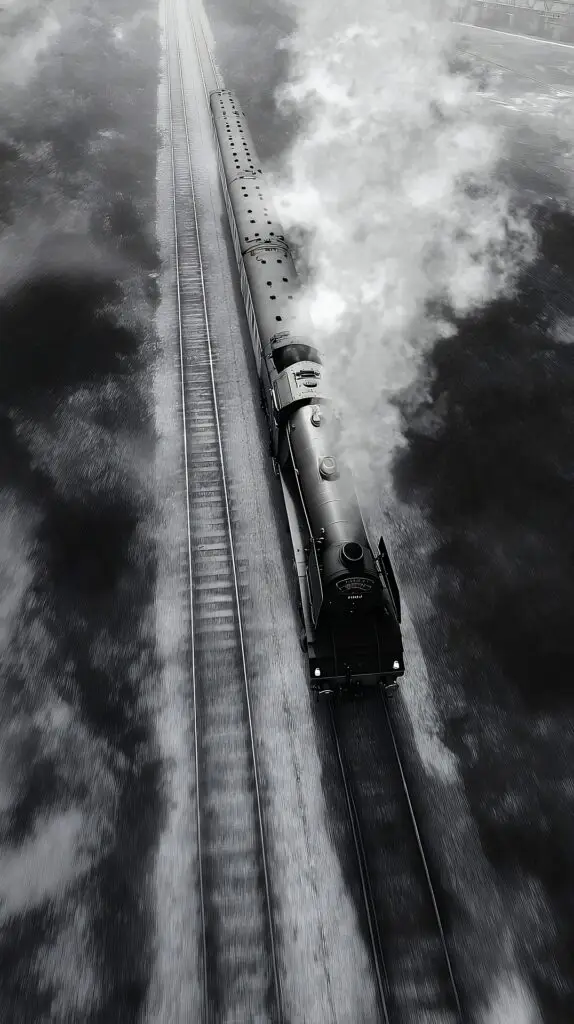
History often finds its most profound expressions not in the grand declarations of kings, but in the strategic necessity of a crossroads. In August 1941, the territory of Iran—ancient Persia—was entered by the coordinated advance of the British Empire and the Soviet Union (Stewart, R. A., Sunrise at Abadan: The British Invasion of Iran, 1941, 1988). The rationale was grounded in stark pragmatism: the Pahlavi dynasty’s perceived leanings toward the Axis powers threatened the security of the “Persian Corridor,” a critical supply artery through which Allied resources flowed to a beleaguered Soviet front (Motter, T. H. Vail, The Persian Corridor and Aid to Russia, 1952). Within days, the Iranian resistance subsided, Reza Shah was forced into exile, and the nation became a central staging ground for the logistics of the global conflict.
This swift subjection of a regional power invites an interpretive structure that looks beyond the movement of divisions and supply lines. It beckons us to consider the biblical archetype of nations as “a drop in a bucket” (Isaiah 40:15) and the enigmatic ways in which human ambition is often subsumed into a larger, providential design.
The Echo of Imperial Transience
The suddenness with which the Pahlavi sovereignty was set aside mirrors a recurring biblical motif: the fragility of earthly dominion when confronted by the shifting tides of a larger cosmic drama. The Prophet Daniel, who stood in the very courts of Susa, spoke of a God who “removes kings and sets up kings” (Daniel 2:21). In 1941, as the Great Powers established a path through Persia to sustain their struggle against an expanding tyranny, one might perceive an echo of this ancient reality.
Was the 1941 entry merely a tactical footnote of the Second World War, or did it reflect the biblical pattern of a “middle power” being harnessed for a purpose it did not choose? Just as the ancient Persian Empire was once used as a vessel to restore a remnant (Ezra 1:1), the modern Iranian state was, in 1941, involuntarily pressed into the service of a global cause. The interpretive structure here suggests that nations, even in their resistance, may find themselves playing a role in a script authored by a higher Hand—one that prioritizes the preservation of a broader moral order over the immediate autonomy of a single throne.
The Corridor of Providence
The “Persian Corridor” itself—the physical road and rail that carried the weight of a world’s survival—offers a pattern that may invite theological reflection. Throughout Scripture, specific geographical conduits are often utilized to bring about larger purposes. From the desert paths of the Exodus to the Roman roads that facilitated the spread of the Gospel, the “pathway” is rarely neutral.
When we view the 1941 invasion through this lens, the transformation of Iran into a supply route takes on a texture that resonates with the imagery of a highway being prepared in the wilderness (Isaiah 40:3). While the Allied intent was primarily militaristic, the result was a forced connectivity that bound the fate of the East to the West (Pollack, K., The Persian Puzzle, 2004). One is left to ponder: Does the forced opening of a nation serve only the ends of war, or does it reflect a spiritual law where isolation must eventually give way to the interconnectedness of the human family, however complex that transition may be?
An Unfinished Horizon
Yet, to conclude that 1941 was a definitive act of divine judgment or a simple fulfillment of a specific prophecy would be to overstep the bounds of interpretive humility. The transition of the Pahlavi throne in 1941 did not bring an end to the “Persian Drama”; rather, it merely shifted the scenery for the complexities we witness in the modern era.
The biblical narrative consistently avoids providing us with a closed, mechanical view of history. Instead, it offers a “theology of the interim.” As we look back at the forces crossing the Iranian border in 1941 and then look forward to the geopolitical shadows of the present day, we see a nation that remains at the vortex of global longing and strife.
The 1941 invasion remains an open question in the ledger of providence. Was it a moment of necessary intervention in a fallen world, or a precursor to a final, sovereign reconfiguration of the Middle East? We are left to watch the horizon, acknowledging that while the “Persian Corridor” once served the temporal salvation of an alliance, the ultimate path of this ancient land is still being traced by a Pen that moves in a different rhythm than the mandates of earthly powers. The end is not yet; the horizon remains open, veiled in both the mystery of the past and the anticipation of what is yet to come.