S1 — HOOK
Every intelligence agency at war eventually depends on someone who never wears a uniform.
Ukraine’s military intelligence directorate has spent the past several years building human networks inside territory it does not control — residents in occupied towns who pass along what they see. Ukraine’s own security service has documented thousands of treason and collaboration cases since 2022, with convictions numbering in the hundreds;1 the count runs in both directions, since some of those residents were informing for the occupying power, and others, whose numbers no public register can give, were informing against it.
None of the latter are soldiers. Most will never be named. If they are caught, the power occupying their own street does not treat them as combatants. It treats them as traitors.
That is the strange arithmetic of an informant. To one side, an asset. To the other, a criminal. To history, usually, no one at all — a case number, if she is lucky enough to have a file at all.
The Book of Joshua opens with exactly this kind of person, and it does something the modern case files rarely do. It writes down her name.
S2 — HISTORICAL CASE
A City Already Afraid
Long before informants had files, they had reputations, and reputations depended entirely on which side kept the record. Occupied France produced escape networks — ordinary shopkeepers, farmers, and clergy who hid downed airmen and passed word of troop movements to people they had often just met. To the government they lived under, they were saboteurs. To the government they served, they were something closer to family. History settled that argument decades later, and only because one side eventually lost the power to write it.
The uniform changes. The century changes. The problem of who gets to write a person’s record does not.
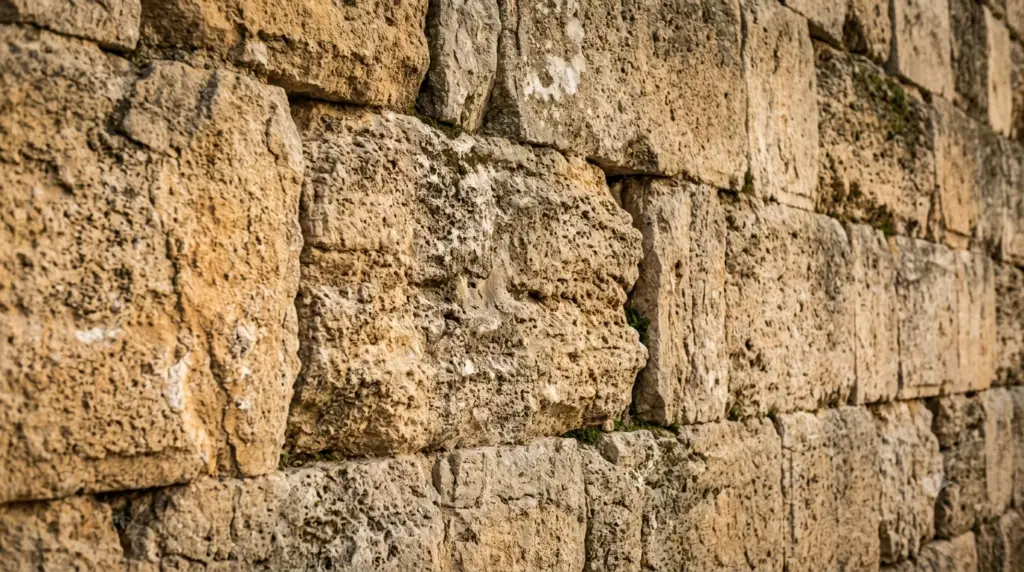
Jericho, by the time two Israelite scouts slip inside its gate, is a city with the same kind of record-keeping problem, though it does not yet know it. It has heard what happened at the Red Sea forty years earlier — the story has had four decades to travel, and it has lost nothing in the telling. The king’s household is watching for outsiders. And the two men Joshua sends do not go to a garrison or a gate-captain. They go to a house built into the city wall, belonging to a woman whose profession the text does not soften: Rahab, a prostitute — the one house in Jericho where two strangers arriving after dark would draw no particular notice.
What the King’s Men Never Found
When the king’s men come looking, Rahab has already hidden the two spies under stalks of flax drying on her roof. She tells the search party the men have already left, sends them toward the fords of the Jordan, and closes the door.
Then she climbs back up to the roof and says something the two spies never asked her to say.
S3 — BIBLICAL LENS
“I know that the LORD hath given you the land, and that your terror is fallen upon us, and that all the inhabitants of the land faint because of you. For we have heard how the LORD dried up the water of the Red sea for you, when ye came out of Egypt… and as soon as we had heard these things, our hearts did melt, neither did there remain any more courage in any man, because of you: for the LORD your God, he is God in heaven above, and in earth beneath.” (Joshua 2:9–11, KJV)
She is not reporting what she knows about Jericho’s defenses. Before the spies ever ask for it, she tells them what she has concluded about their God — unprompted, inside a city that has not yet fallen. She names the God of the people she is about to betray as God in heaven above, and in earth beneath. The irony is hard to miss: one of the clearest statements of Yahweh’s sovereignty anywhere in the conquest narrative comes not from a prophet or a priest, but from a Canaanite woman on her own rooftop, addressed to two men she had known for less than an hour.
Call it betrayal, if you are the king of Jericho. Israel would call it allegiance. Centuries later, the writer of Hebrews would call it faith; the writer of James would call it evidence that faith was real because it moved her to act. The moral vocabulary changes depending on which court is trying her case — and Scripture, notably, does not pretend that only one of those courts existed. It lets the king’s version of events stand unspoken in the background, and answers it anyway.
Whatever mixture of fear, calculation, and something closer to faith produced that confession, her next move — staking her whole family on a claim she had just made out loud for the first time — was not panic. It was negotiation.
“Now therefore, I pray you, swear unto me by the LORD, since I have shewed you kindness, that ye will also shew kindness unto my father’s house… and deliver our lives from death.” (Joshua 2:12–13, KJV)
The word she reaches for — kindness — is a thin translation of hesed, the Hebrew term for covenant loyalty: the specific, binding faithfulness one party owes another because of a promise made, not because of any feeling in the moment. It is the word used for what God owes Israel and what Israel owes God. Rahab, a Canaanite with no covenant of her own to invoke, uses Israel’s own theological vocabulary to bind two strangers to her family’s survival — and asks for nothing but her father’s household: brothers, sisters, parents, not wealth or an easy escape. The two spies, with no authority to make treaties on Israel’s behalf, swear the oath anyway.
“And Joshua saved Rahab the harlot alive, and her father’s household, and all that she had; and she dwelleth in Israel even unto this day.” (Joshua 6:25, KJV)
The sign of that oath was not a document. It was a length of scarlet cord, tied in the window of the one house built into the wall — visible from outside the city, meaningless to anyone who did not already know what it marked (Joshua 2:18, 21). No file, no seal, no register of names. Only a color hung where the coming army could see it, the same color already familiar to Israel from a doorframe in Egypt on the night the angel of death passed over. When the walls came down, that house — and only that house — was the exception written into the wreckage (Joshua 6:22–23).
Scripture does not hand Rahab a clean biography before it hands her a covenant. The text keeps calling her “the harlot” even after the walls fall — there is no quiet dropping of the label once she becomes useful. God does not require her past to be erased before she is allowed a new allegiance; he requires only that she place herself under it.
Nor does her rescue resolve the harder question this account raises and does not answer: what becomes of everyone else inside those walls. The conquest narrative does not ask a modern reader to treat every fallen city as a settled verdict on the people in it. What it insists on is narrower and, in its way, more unsettling — that inside a city given over to destruction, at least one household’s choice, made under threat and for reasons that were not entirely pure, became the one thing that survival turned on.
S4 — PATTERN INSIGHT
The Ledger God Keeps Differently
Every occupying power keeps a file, and every file reads the same way: collaborator, informant, traitor to her own city. The king who ruled beneath her window would have written Rahab’s file that way, if Jericho had survived long enough to write anything at all.
The deeper question a file like that never has to answer is who actually has the right to write it. A king can call a woman a traitor. A nation she helps can call her an ally. History, whoever happens to be holding the pen when the war ends, can call her either — or nothing, since most such names are never recorded by anyone. The king below recorded, at most, a disappearance. Scripture recorded a mother.
Scripture keeps a different kind of ledger, and it is worth being precise about what kind. It does not erase what Rahab was. It does not launder her occupation into something more palatable. What it refuses is neither erasure nor exoneration, but something closer to re-narration: the past is not deleted, and it is also not allowed to be the last word on who she is. It puts her, occupation and all, inside the family line of the kingdom she helped survive.
Matthew’s genealogy of Jesus — a document built almost entirely of fathers begetting sons — pauses four times to name a mother instead. Tamar. Ruth. “her that had been the wife of Urias.” And Rahab (Matthew 1:5), standing in the line that runs, through Boaz and David, to Jesus.
It is tempting to read this as a reward: she helped establish the kingdom, so the kingdom repaid her with a place in its record. That reading is too small. The more interesting question is why Matthew bothered to remember these particular women at all, when leaving them out would have cost him nothing and a genealogy of fathers would have read more cleanly. The answer the text seems to be giving is not that God overlooks impurity to make an exception for the useful. It is that the sacred line itself was never built on purity of blood in the first place — it was built, from Tamar forward, on grace that kept choosing to work through exactly the people a family register would have preferred to leave out.
S5 — CLOSING
The House Still Standing in the Rubble
Joshua 6 describes the fall of Jericho in the language every conquest account uses — walls collapsing, a city given over entirely to destruction. Then the text stops, almost mid-catastrophe, to note one exception: Rahab’s house, built into that same wall, was not touched. Everyone inside it walked out.
Joshua gives no clean formula for why. Not because her motives were pure — the text never claims that. Not because her past had been settled — it hadn’t; she is still “the harlot” three chapters later. She was spared because, before either side had won anything, she heard what her own people already knew and feared, and did the one thing fear alone does not usually produce: she said it out loud, staked her family on it, and asked the God she had just named for mercy.
Most informants stay unnamed by design — the file closed, the risk paid, the record withheld even from the history that depended on them. Human history tends to keep its records the way the winners and the nations want them kept: by what was useful, by what serves the story a kingdom wants told about itself. Scripture kept Rahab’s record differently — not because she was useful to a winning side, but because someone was keeping account of a name that no census in Jericho or Israel had any obligation to remember. It kept her past attached to her, and gave her a place in a genealogy no one would have written for her in advance.
The wall came down around her. The house did not.
1. LIGA.net, “The SBU Has Opened Thousands of Criminal Proceedings for Treason and Collaborationism,” 2025.