The Fault Line · Part 5-2
Israel, Its Neighbors, and the Pattern That Outlasts Empires
Section I
The Announcement That Outlasted the War
At 10:02 a.m. on June 7, 1967, a voice crackled across Israeli military radio: “The Temple Mount is in our hands. I repeat — the Temple Mount is in our hands.”
The words belonged to Brigadier General Mordechai Gur, commander of the paratrooper brigade that had just fought through the Lion’s Gate into the Old City of Jerusalem. The war had begun two days earlier, on June 5, when Israeli aircraft swept west over the Mediterranean before turning south — catching Egyptian airfields by surprise and destroying roughly ninety percent of the Egyptian air force on the ground within hours. By the time Gur’s paratroopers reached the Western Wall on the morning of June 7, the war’s outcome was already largely settled. What had not been settled — and has not been settled in the six decades since — was what the victory meant.
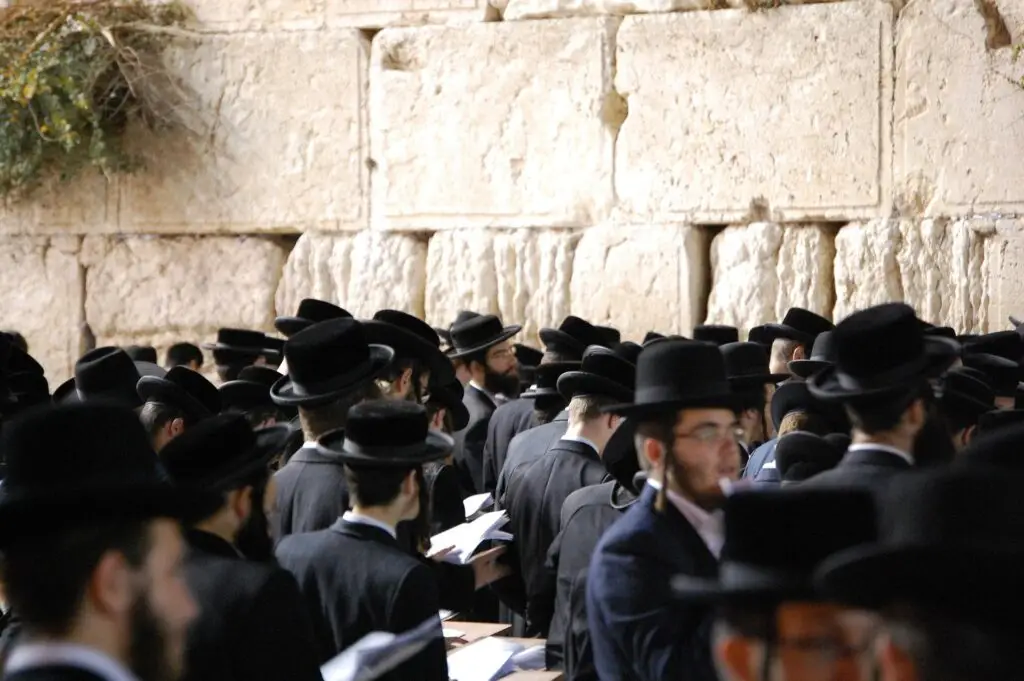
General Rabbi Shlomo Goren, the IDF’s chief chaplain, sounded a shofar at the Western Wall within minutes of the site’s capture. Secular soldiers who had never prayed were seen weeping and asking their companions how to do it. Something had broken open. For Jewish communities around the world, the emotional weight of the moment was almost impossible to contain: a Jewish army standing at the holiest site in Judaism, inaccessible to Jewish worshippers since 1948, for the first time in nearly two thousand years.
Three days later, the guns stopped. Israel had tripled in size. It now held the Sinai Peninsula and Gaza Strip from Egypt, the West Bank and East Jerusalem from Jordan, the Golan Heights from Syria. Six days of fighting had redrawn a map that would define the region’s political terrain for the remainder of the twentieth century — and into the twenty-first.
In the previous installment, we traced the mechanics of partition — the letter of sixty-seven words that made a promise over land its author did not yet hold, and the war of 1948 that produced a map neither side had proposed. This installment picks up where that map ended: at the armistice lines of 1949 that became, on June 5, 1967, the launching pad for a war whose consequences no one has yet fully resolved. In the previous installment, we examined the partition line and the arithmetic of the 1947 UN plan →
Section II
The Speed of the Victory and the Weight of What Followed
The military achievement of June 1967 was genuine and, by any measure, extraordinary. Israel faced a coalition of Arab armies along three borders, following weeks of escalating crisis — Egypt’s closure of the Straits of Tiran, cutting off Israeli access to the Red Sea; the massing of Arab forces along Israel’s frontiers; Egyptian President Gamal Abdel Nasser’s public declaration that the armies of Egypt, Jordan, Syria, and Lebanon were “poised on the borders of Israel.” The threat, as experienced in Israel at the time, was not rhetorical. Many Israelis genuinely feared they were on the edge of national destruction.
What unfolded instead was a preemptive strike of remarkable precision, followed by a ground war that advanced faster than even the most optimistic Israeli commanders had planned. By June 10, when a UN-brokered ceasefire came into effect, Israel had not merely survived. It had captured territory roughly four times its original size.
But here is the structural problem that military victories have always created: speed of acquisition and clarity of possession are not the same thing. Rome discovered this after expanding across three continents. Spain and Portugal discovered it in the Americas. Britain discovered it repeatedly — and most painfully — in the lands it governed under mandate. A force can occupy territory in days. It cannot, by force alone, settle what that territory means or who belongs to it. The maps that wars produce do not come with agreed interpretations. They come with lines, and the lines accumulate disputes the way coastlines accumulate sediment.
Within weeks of the ceasefire, two documents began their long career as the diplomatic architecture of everything that followed. The first was the Khartoum Resolution, signed at the Arab League summit in Sudan on September 1, 1967. It established what became known as the “Three Nos”: no peace with Israel, no recognition of Israel, no negotiations with it. The resolution was not, as it is sometimes characterized, a simple statement of permanent hostility. Later historians, including Avi Shlaim, have argued that the public text and private diplomacy were not entirely identical — that the conference also contained signals of Arab willingness to work toward a political solution short of formal recognition, signals not legible in the public document.1 That interpretive gap — one side hearing absolute rejection, the other side issuing signals it assumed would be received — was itself a pattern. The documents meant to communicate left room for misreading. The misreadings accumulated.
The second document was UN Security Council Resolution 242, passed unanimously on November 22, 1967. Its architects were too honest to be optimistic and too cautious to be specific. The resolution called for the withdrawal of Israeli armed forces from “territories occupied in the recent conflict” — not the territories, not all the territories. The definite article was missing, and its absence was deliberate. Henry Kissinger would later reflect, in conversations with Egyptian National Security Adviser Hafez Ismail documented by William Quandt, that the resolution had passed only because every party believed it could be interpreted to mean what they already preferred.2 The English and French texts diverged in ways that lawyers on every side have been arguing about ever since. What was intended as a foundation for peace functioned, in practice, as a document whose ambiguity was its most durable feature.
The pattern here is familiar to anyone who has followed this series. The Balfour Declaration named a contradiction without resolving it. The UN Partition Plan of 1947 allocated land without securing consent. Resolution 242 established a principle without specifying its application. Each successive attempt to settle the question in language succeeded mainly in encoding the disagreement more precisely and deferring the cost of confronting it.
There was one decision in the immediate aftermath of the war that has received less attention than it deserves, and that crystallizes the structural difficulty more clearly than any treaty. On June 17, 1967 — ten days after Gur’s paratroopers had captured the Temple Mount — Defense Minister Moshe Dayan met with the leadership of the Supreme Muslim Council and the Islamic Waqf in the Al-Aqsa Mosque. He returned administrative control of the Temple Mount compound to the Jordanian Waqf. He ordered the Israeli flag, which had briefly flown over the Dome of the Rock, removed. He established what became known as the “status quo”: the Waqf would administer the site’s internal affairs; Israel would maintain external security; Jews could visit but not pray on the Mount.3
Dayan acted unilaterally — without a cabinet vote — and his reasoning was pragmatic. He did not want the Temple Mount to become the ignition point for a confrontation with the entire Muslim world at the very moment Israel was consolidating its other gains. He was almost certainly right about the short-term calculation. But the arrangement he created did not resolve the underlying question of the site’s ultimate belonging. It suspended it, formally, in an oral agreement between a secular Israeli general and a Jordanian religious authority, over a piece of land that three faiths regard as the axis of their respective relationship with God. That suspension has been tested, strained, and challenged repeatedly in the decades since. It has not broken. It has also not been replaced by anything more permanent.
Section III
Three Texts on Speed, Sovereignty, and the Patience of Stone
The first scripture comes from the book of Psalms — specifically the poem that has functioned, in Jewish tradition, as the definitive expression of the experience of exile and the longing for return:
“If I forget you, O Jerusalem, let my right hand forget its skill. Let my tongue cling to the roof of my mouth if I do not remember you, if I do not consider Jerusalem my highest joy.” (Psalm 137:5–6, NIV)
General Gur’s announcement on June 7, 1967 was immediately understood through the frame of this psalm. The chaplain who sounded the shofar at the Western Wall was invoking a tradition of mourning that had lasted nineteen centuries — longer than the Roman Empire itself, longer than any of the nations that had held the land between 70 AD and 1967. The emotional force of the moment was not manufactured. The psalm had been prayed at Passover tables every year, incorporated into Jewish wedding ceremonies as the bridegroom breaks a glass in remembrance of the Temple’s destruction, embedded in the liturgy in a dozen forms. What the soldiers who wept at the Western Wall were experiencing was the return of a grief too long carried to be immediately distinguishable from joy.
What the text also contains — and what the speed of military victory made easy to pass over — is the context in which it was written. Psalm 137 is a lament composed in exile, by people sitting beside the rivers of Babylon, asked by their captors to sing songs of their homeland. It is a poem that holds longing without arriving at possession. The vow it makes is about memory, not mastery. “If I forget you” is the condition. The psalm does not say: and when I return, I will know how to hold what I find.
That structural irony deserves a moment’s attention. A poem born in powerlessness — written by a people who had everything taken from them — was now being invoked in the hour of overwhelming military possession. The psalm was composed precisely in the absence of what June 7, 1967 suddenly restored. Whether that reversal fulfills the psalm or strains it is a question the text leaves open, and has left open across the six decades since.
The second scripture comes from Zechariah, a prophet writing during the period of Jewish return from Babylonian exile — a return that, like 1948 and 1967, was experienced by the returning community as miraculous and by others in the land as displacement:
“This is what the LORD Almighty says: ‘I am very jealous for Jerusalem and Zion, and I am very angry with the nations that feel secure. I was only a little angry, but they went too far with the punishment.'” (Zechariah 1:14–15, NIV)
The prophetic framework here is not a simple vindication of one side. The text holds simultaneous claims: a stated commitment to the restoration of Jerusalem, and an equally stated anger at nations that exceeded their authority in their dealings with its people. The prophetic tradition never allows divine promise to become an unconditional endorsement of national conduct. The distinction between a promise and a license is one the prophets never stop insisting on.
The third scripture is from Micah — a prophet contemporary with Isaiah, writing during the Assyrian period, who articulated perhaps the most frequently invoked vision of a Jerusalem that no military campaign has yet produced:
“Many nations will come and say, ‘Come, let us go up to the mountain of the LORD, to the temple of the God of Jacob. He will teach us his ways, so that we may walk in his paths.’ … He will judge between many peoples and will settle disputes for strong nations far and wide. They will beat their swords into plowshares and their spears into pruning hooks. Nation will not take up sword against nation, nor will they train for war anymore.” (Micah 4:2–3, NIV)
This is the Jerusalem that no partition plan has reached — a city where nations come not to contest sovereignty but to receive instruction, where the mountain is a destination for the many rather than a prize for the strongest. It is not a political program. It is a description of what Jerusalem is ultimately for. Every human arrangement that has claimed the city — Ottoman, British, Jordanian, Israeli, the projected Palestinian — claims it under the shadow of an aspiration it has not fulfilled. The gap between Micah’s mountain and the mountain as it has been administered, by every administration in turn, is not evidence against the vision. It is evidence of how far every human settlement remains from it.
Section IV
The Map That Moves, and What It Cannot Move
The numbers from June 1967 are worth stating plainly. Before the war, Israel occupied approximately 20,700 square kilometers. After it, the territory under Israeli military control encompassed roughly 89,000 square kilometers — including the Sinai Peninsula (returned to Egypt in 1982 under the Camp David Accords), the Golan Heights (formally annexed by Israel in 1981), East Jerusalem (annexed under Israeli law in 1967, disputed by international legal consensus), the West Bank (under varying degrees of Israeli military and civil administration since 1967), and the Gaza Strip (under Israeli occupation until 2005, under Hamas governance since 2007, under renewed Israeli military campaign since October 2023).4
The Jewish settlements in the West Bank — construction of which began in the months immediately following the war — now number more than 130 officially recognized settlements, alongside numerous unauthorized outposts, housing a population that various estimates place at more than 700,000 (UN Office for the Coordination of Humanitarian Affairs, 2023). The international legal status of those settlements under Resolution 242 and subsequent UN resolutions has been consistently characterized as contrary to international law. The Israeli government’s position has consistently differed. The gap between those two positions has not narrowed. It has widened.
The speed at which territory can be acquired has never been matched by the speed at which legitimacy can be established. This is true of empires. It is true of the city-states that preceded them. It is true, on the evidence of six decades, of the geopolitical arrangement that emerged from June 1967.
The pattern the preceding parts of this series have traced runs through this moment with particular clarity. Alexander the Great conquered the known world in a decade; the empire fractured within a generation of his death. The Roman destruction of the Temple in 70 AD eliminated the political structure of Jewish life in the land — it did not eliminate the Jews, the memory, or the claim, which survived for nearly two thousand years until they returned to produce the conditions that led to June 1967. The Maccabees recovered the Temple in 164 BC through a campaign of striking boldness; the Hasmonean dynasty they established had collapsed under its own internal contradictions within a century. Josephus, who watched the Temple burn from inside the Roman camp, understood something that victors rarely pause long enough to consider: a military outcome is not the same as a historical resolution.
Dayan understood this too, in his way. His decision to return the Temple Mount to Waqf administration was the decision of a man who grasped that controlling a piece of ground and resolving what it means are two entirely different operations. He chose to manage the tension rather than force a resolution he did not have the tools to achieve. He was correct that forcing a resolution would have triggered immediate catastrophe. He was also correct, implicitly, that the management would not last forever.
Here the pattern bends back toward the text. Psalm 137 is a poem that survived nineteen centuries because it held the longing without demanding immediate satisfaction. Zechariah warned that restoration does not confer immunity from accountability. Micah described a Jerusalem that serves as a destination for the nations — not a trophy of any single nation’s triumph. The biblical frame does not resolve the political question. It situates it: inside a longer arc, under a moral standard that no military victory satisfies, pointing toward an order whose realization no generation has yet secured.
Section V
Six Days and the Work They Left Undone
The shofar that Rabbi Goren sounded at the Western Wall on June 7, 1967 was a sound that had not been heard at that site since the Temple’s destruction. It announced a return. What it could not announce — what no shofar can announce — was a resolution. Return and resolution are not the same event. The tradition that produced Psalm 137 understood this: the vow to remember Jerusalem was made in exile, and it was made as a condition of continued meaning, not as a guarantee of peaceful reoccupation.
Six days of war produced a map. The map produced a status quo — Dayan’s oral agreement with the Waqf, Resolution 242’s missing definite article, the Khartoum “Three Nos” and their private diplomatic asterisks. Each element of that status quo was designed to contain a conflict whose underlying structure it could not resolve. Each has been strained. None has been replaced by anything more adequate.
What the Six-Day War established was not a settlement but a new set of conditions within which the older conflict would continue. The fault line did not move. The terrain above it shifted, dramatically and suddenly, and then settled into a new configuration that proved nearly as resistant to negotiation as the configuration it replaced.
The gap between the Micah vision — nations streaming to the mountain, swords becoming plowshares — and the mountain as it has been administered in every generation is not a counsel of despair. It is a description of what remains. The Camp David Accords narrowed it between Israel and Egypt. Oslo tried to narrow it between Israel and the Palestinians and stalled. The Abraham Accords normalized relations between Israel and several Gulf states without addressing the Palestinian question quietly set aside in the process. Since October 2023, the fighting in Gaza has made plain what the diplomatic architecture of fifty-six years had managed to defer: that the conditions produced by six days of war in 1967 had not been resolved — only suspended, at compounding interest. The work of any generation is to leave the gap smaller than it found it.
The fault line this series has traced from the Babylonian exile through the Maccabees, through the Roman destruction, through Josephus’s careful accounting of a catastrophe he survived, through the Balfour Declaration and the partition — arrives here, at the Western Wall on the morning of June 7, 1967, where secular soldiers wept because something ancient in them recognized the place. And it continues forward from here, still unresolved, still carrying the full weight of the pattern.
The mountain was taken in six days. Its meaning has resisted six decades.
Footnotes
1 On the Khartoum Resolution and its public and private dimensions, see Avi Shlaim, The Iron Wall: Israel and the Arab World (New York: W. W. Norton, 2000), pp. 253–258. Shlaim notes that the “Three Nos” — no peace, no recognition, no negotiations — were understood in Israel as absolute rejection, while the conference also contained implicit signals of Arab willingness to seek a political resolution short of formal recognition. Fred Khouri similarly argued that Khartoum “cleared the way for the Arab moderates to seek a political solution.” The text of the Khartoum Resolution, September 1, 1967, is reproduced in full at the Arab League archive and at sixdaywar.co.uk. ↩
2 United Nations Security Council Resolution 242 (S/RES/242), adopted unanimously November 22, 1967. The Kissinger observation regarding deliberate ambiguity was recorded in his conversation with Egyptian National Security Adviser Hafez Ismail, February 1973, cited in William B. Quandt, Decade of Decisions: American Foreign Policy Toward the Arab-Israeli Conflict, 1967–1976 (Berkeley: University of California Press, 1977), p. 138. On the English-French textual divergence: the English text reads “withdrawal of Israeli armed forces from territories occupied”; the French text reads “retrait des forces armées israéliennes des territoires occupés lors du récent conflit,” which more clearly implies all occupied territories. Israeli Foreign Minister Abba Eban immediately announced at the Security Council that Israel would recognize only the English version. Lord Caradon, the resolution’s principal drafter, and Arthur Goldberg, the US ambassador, both subsequently confirmed the omission of “the” was intentional, intended to leave room for negotiated adjustments to the 1949 armistice lines. See also Benny Morris, Righteous Victims: A History of the Zionist-Arab Conflict, 1881–1999 (New York: Knopf, 1999), pp. 328–330. ↩
3 On Dayan’s June 17, 1967 meeting and the establishment of the Temple Mount status quo: Institute for National Security Studies (INSS), “The Risk of Changing the Status Quo on the Temple Mount,” Strategic Assessment, 2024. According to the INSS account, drawing on Israeli historian Amnon Ramon’s research, Dayan acted on his own initiative without a cabinet decision. The status quo arrangement included three principles: internal civilian management of the compound would remain with the Islamic Waqf; public order and security would be maintained by Israeli security forces; only Muslims would be allowed to pray on the Mount, with non-Muslims permitted to visit but not worship. The arrangement was formalized in the 1994 Israel-Jordan peace treaty, Article 9, which recognized Jordan’s special custodial role. On the early settlement of Kfar Etzion and the broader settlement movement begun in late 1967, see Gershom Gorenberg, The Accidental Empire: Israel and the Birth of the Settlements, 1967–1977 (New York: Times Books, 2006). ↩
4 Territorial figures: pre-1967 Israeli territory approximately 20,700 km²; total territory under Israeli military control after the war approximately 89,000 km², including the Sinai Peninsula (61,000 km²), the West Bank (5,860 km²), the Gaza Strip (363 km²), and the Golan Heights (1,800 km²). Source: Benny Morris, 1948: A History of the First Arab-Israeli War (New Haven: Yale University Press, 2008); and Encyclopaedia Britannica, “Six-Day War,” updated 2024. West Bank settlement population figure: UN Office for the Coordination of Humanitarian Affairs (OCHA), Humanitarian Situation Update: Occupied Palestinian Territory, 2023. The UN, EU, and the International Court of Justice have characterized settlements as contrary to international law under the Fourth Geneva Convention; the Israeli government disputes this characterization. ↩