Someone Has to Say the Word First
Most reports of a war’s end fix on the document: who signed, who withheld, what the map will look like afterward. The moment I keep returning to is earlier and smaller than any signature. Before there is a text to sign, someone has to decide to ask — and asking is the one move a strong side cannot make without spending something it may not recover.
On Sunday, September 6, 2026, two American envoys arrived in Kyiv by train, one day after a Kremlin meeting with Vladimir Putin that ran more than three hours and closed without an announced breakthrough (AP, 2026). Most of that week’s coverage weighed what the envoys carried and what they left unsaid. Less attention went to the older problem beneath every negotiation, the one that arrives before any proposal is drafted: somebody has to decide to ask.
Asking is costly. Allies hear surrender in it, enemies hear an opening, and the toll climbs with the height of the person who pays it. In the autumn of 202 BC, on a plain in North Africa, the general who had once brought Rome to the edge of ruin paid that toll on the eve of a battle he still had reason to think he might win.
In the previous installment, we stayed on the field at Cannae, beside a wounded consul who refused a horse rather than buy his life with another man’s blame. The man who had made Cannae a byword for Roman defeat was Hannibal. Fourteen years on, recalled to defend his own city, he did the one thing victory had never taught him to do: he counted the odds out loud, and asked.
Two Interpreters and a Silence
By 202 BC, Hannibal had spent more than fifteen years loose in Italy, and a frightened Carthage had recalled him. A young Roman general, Publius Cornelius Scipio, had carried the war onto African soil, and a fragile truce had already collapsed when Carthaginians seized a party of Roman envoys, so neither side entered that autumn inclined to mercy (Polybius).
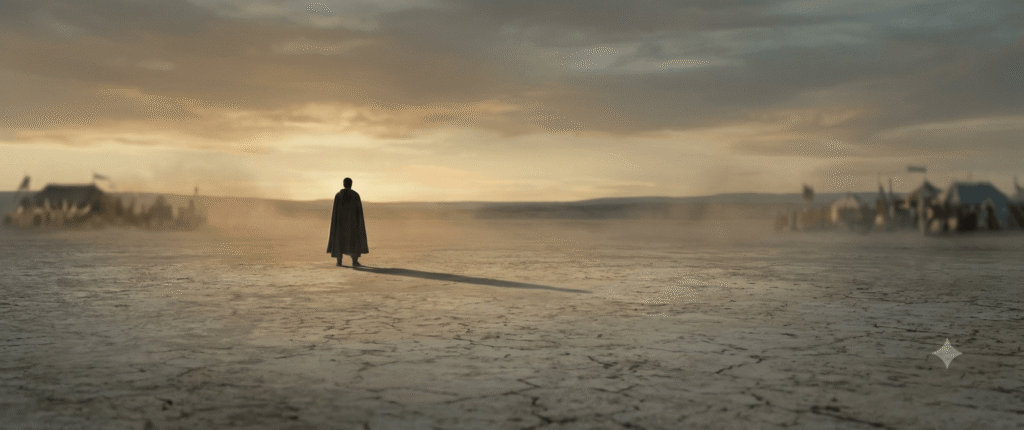
What moved first was not a demand but a curiosity. Hannibal had sent three spies into the Roman camp; Scipio, instead of executing them, had an officer show them the whole layout and sent them back fed and escorted. The gesture so struck Hannibal that he asked for a meeting, and Scipio agreed and named the place. Both men walked out into the open ground between their camps, left their escorts behind, and came forward with only an interpreter each. For a moment neither spoke, each held by the sight of the other (Polybius; Livy). Then Hannibal, who had asked for this, was the first to speak.
He opened with a wish rather than a claim: that Rome had never reached beyond Italy, nor Carthage beyond Africa. Then came the sentence that carries the scene. By hard experience, he said, he had learned how fickle Fortune is, tipping the scale on the slightest pretext, as though sporting with children. He offered his own life as the proof — the man who after Cannae had camped within sight of Rome now stood in Africa bargaining with a Roman for his country’s safety — and he proposed that Sicily, Sardinia, Spain, and the islands between should be Rome’s, if Carthage might keep the rest (Polybius).
Scipio’s reply was courteous and closed. He allowed that no one was more alert than he to Fortune’s turns; but Carthage had begged for peace once already, been granted written terms, and then broken them the moment Hannibal’s return gave it hope. To drop conditions now would only reward the treachery. What remained, he said, was to submit at discretion, or to fight (Polybius). The two parted. The next morning the armies formed.
The fighting took a single day. Scipio opened lanes in his line so the war-elephants could pass through without shattering it; the Roman and Numidian cavalry, returning from their pursuit, fell on Hannibal’s rear at the deciding hour; and by dusk the army that had marched through Italy for a decade and a half was gone. Hannibal escaped to Hadrumetum with a few horsemen (Polybius).
These speeches ask to be held with open hands. Polybius wrote within a lifetime of Zama, close to Scipio’s own family; Livy wrote two centuries later; both composed the words to serve the stories they were telling (Walbank, 1967). What survives in both accounts is the shape rather than the phrasing: Hannibal asked for terms, and Scipio refused them.
The King Who Counts Before the Fight
Three passages stand near this scene, and not one of them closes it.
The first turns on arithmetic. Jesus asks what king, learning that a rival marches against him with twice the men, would not sit down first and reckon whether he can meet him. If the sum comes out against him:
“he sendeth an ambassage, and desireth conditions of peace.” (Luke 14:32, KJV)
The parable is about the cost of discipleship, not a manual for statecraft. But its timing stays with me: the envoys go out while the other king is yet a great way off — while there is still something left to bargain with, and before the reckoning is forced. It is the same discipline we traced in an earlier essay on waiting for a sign: the hardest counting is the kind done early, before events do the counting for you.
The second is a proverb flung across a battle line.
“Let not him that girdeth on his harness boast himself as he that putteth it off.” (1 Kings 20:11, KJV)
Ahab of Israel sends it to Ben-hadad of Syria, who has been boasting of his host before a fight he is about to lose. By the chapter’s close, Ben-hadad’s men are pleading for his life in sackcloth. Yet the text declines to hand us a hero — a prophet then rebukes Ahab for the very mercy he shows the beaten king, so the chapter keeps the boast, the collapse, and the flawed victor in one frame.
The third is Qohelet, watching the same kind of field with less comfort to offer.
“…the race is not to the swift, nor the battle to the strong…” (Ecclesiastes 9:11, KJV)
Polybius’s Fortune and Qohelet’s “time and chance” are not one idea. But they lean on the same sill, marking the boundary of what force can promise — and hinting that this boundary is the first thing force forgets it has.
This is not a claim that heaven pronounces sentence in the outcome of a battle. It is a smaller observation, and a more demanding one: strength is prone to forget its own limits, and given time, a people’s conduct settles into a kind of record that anyone still watching can read.
The Arithmetic Nobody Wanted to Hear
Hannibal’s whole argument at the parley was a sum done early. He counted the odds before the dice fell and said the total aloud; the strange thing is not that he lost the throw, but that he had already read it correctly and staked his standing on saying so.
That habit outlived the battle. When Scipio’s terms reached the Carthaginian assembly — Spain and the overseas holdings gone, every war-elephant surrendered and all but ten of the warships, no war permitted outside Africa and none inside it without Rome’s leave, ten thousand talents owed across fifty years (Polybius) — a senator rose to argue against accepting them. Hannibal reached over, took him by the arm, and pulled him down from the speaker’s platform. The room turned on him for the breach; he stood again and apologized, explaining that he had left Carthage at nine and come back at forty-five, and had never learned its floor manners. Then he asked them to weigh not his manners but his meaning: a few days ago they could not have named aloud what defeat might cost them, and now here were terms that let the city live (Polybius; the dissenting senator is the man Livy names Gisgo).
Carthage lived on for fifty-six years after Zama, until Rome burned it to the ground in 146 BC (Goldsworthy, 2006). Nothing in the record says his counsel was thanked, and nothing says it was wrong. It says only that the ledger he read was accurate.
Numbers carry the story only so far; what stays is the shape of the pride they measure. What Hannibal surrendered at that platform was the thing victory had never made him surrender before — not territory, which was already lost, but face: the willingness to be seen asking. What he was reaching for behind it was not comfort but reality, read early enough to still be acted on.
The strong seldom lack the numbers; they lack an audience willing to hear what those numbers mean. Pride does not always collapse like lightning; sometimes it compounds quietly, in a column no one will read, until the day someone is forced to read it aloud.
Humility, in this story, is not softness. It is accuracy spoken early.
The Order in Which Things Are Said
The man who asked first at Zama did not get what he asked for. Scipio refused, the armies met, and the plain settled what the conversation could not. Hannibal spent his last years in exile, hunted by the very power he had told Carthage to accept, and by Livy’s account chose his own death in Bithynia rather than be handed over (Livy). Humility bought him nothing. It only kept his accounts honest to the end.
That is why the platform in Kyiv holds my attention, and whatever corridors come after it. A train pulling into a station tells us nothing about who stands where Hannibal stood, or who has taken Scipio’s part; the old plain is generous that way, since each man was partly right, and only the day could tell them apart. What the scene does lay bare is an order of events. Before the proposal, before the terms, someone has to be willing to say the word first — and to carry, among his own people, the cost of having said it.
The strong cannot avoid the ledger. They can only choose whether to read it before the battle, or be made to read it after.
A note on sources. The battle and the parley follow Polybius, Histories 15.5–19 — the spies sent into the Roman camp, the meeting near Naragara, the exchange of speeches, the terms imposed after the battle, and the scene in the Carthaginian assembly — read alongside Livy, Ab Urbe Condita, book 30, which supplies the silence between the two commanders as they met (30.30) and names the senator Hannibal pulled from the platform as Gisgo (30.37); Hannibal’s death in Bithynia is at Livy 39.51. Where Polybius and Livy differ I have kept to Polybius, the earlier witness, and let his chapter numbers stand behind the narrative rather than in it. On the composed speeches and the Roman literary tradition I have leaned on F. W. Walbank, A Historical Commentary on Polybius, vol. 2 (Oxford, 1967), and on Adrian Goldsworthy, The Fall of Carthage (London, 2006), for the settlement and the city’s later destruction. The opening scene draws on Associated Press reporting of September 6, 2026. Scripture is quoted from the King James Version: Luke 14:32, 1 Kings 20:11, and Ecclesiastes 9:11.